

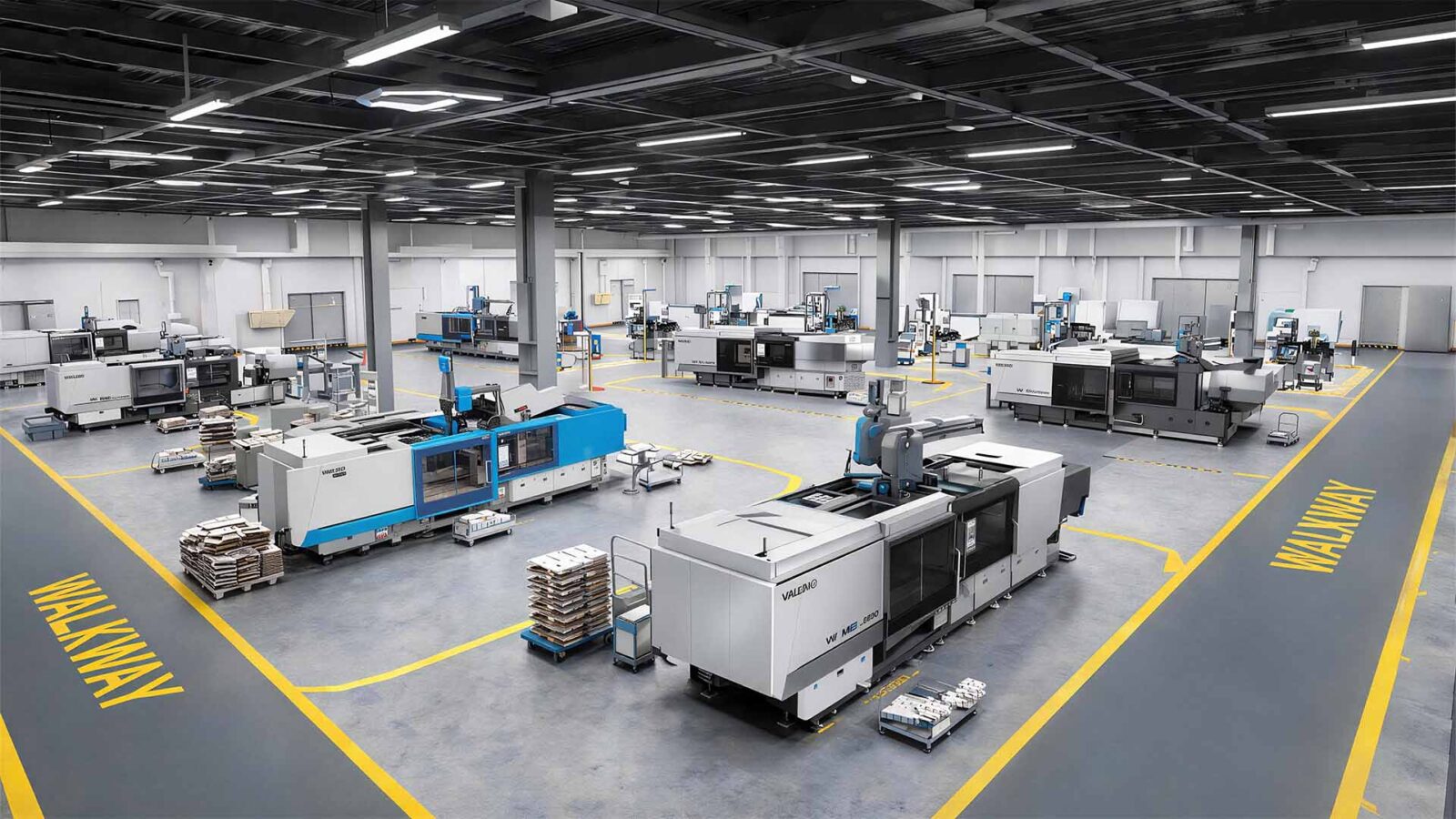
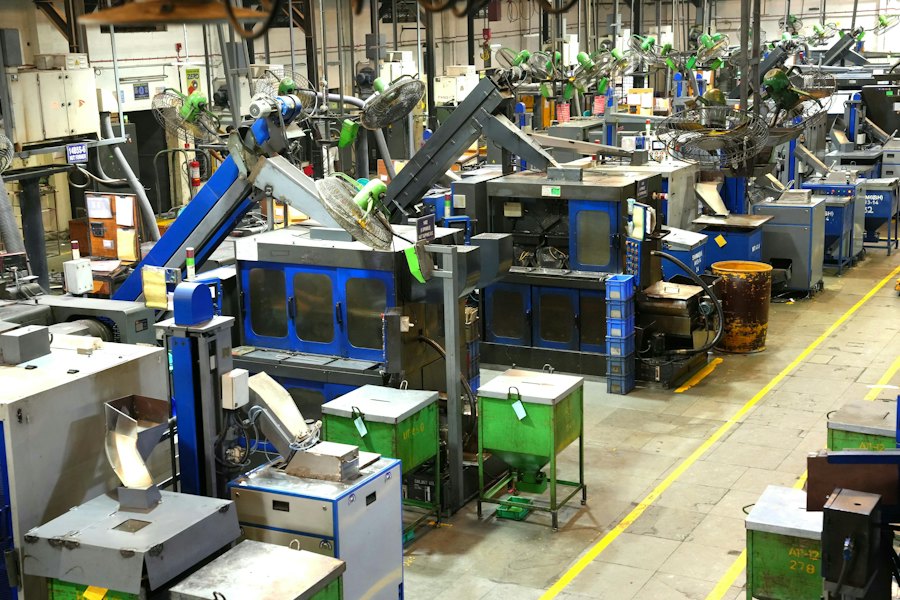
From the bucket in our home to the interior trim parts of our car, and from bottle caps to the plastic components of home appliances, the vast majority of plastic products around us are manufactured using the plastic injection molding method. In this article, we explain how the method works, why the mold is so crucial, and what companies planning to commission production need to pay attention to, in plain language.
What is plastic injection molding?
Injection molding is a series production method based on melting plastic raw material in granular form by heating it, filling it under pressure into a closed mold, and removing it from the mold after it cools and solidifies. The inner cavity of the mold is the exact negative of the product; thus, thousands or even millions of parts with identical dimensions and appearance can be produced.
The greatest advantage of the method is repeatability. When the mold and machine settings are adjusted correctly, the identical part is obtained in every cycle. On the other hand, the mold investment is a significant initial cost; therefore, injection molding is generally preferred for medium and high-volume production.
How does the process work step by step?
An injection cycle can last anywhere from a few seconds to a few minutes. The duration varies depending on the size of the part, wall thickness, and the raw material used. The basic steps are:
-
Mold closing: The clamping unit of the machine presses the two halves of the mold together and locks them to prevent them from opening during injection.
-
Injection (filling): The melted plastic in the barrel is sent into the mold cavity under pressure with the help of a screw.
-
Holding (packing): As the plastic cools, its volume decreases slightly. Pressure is applied for a while longer to compensate for this loss.
-
Cooling: Water circulating through the cooling channels inside the mold ensures the solidification of the part. Cooling is very often the longest part of the cycle.
-
Mold opening and part ejection: The mold opens, and ejector pins push the part out, or a robot takes the part. Then, a new cycle begins.
Why is the mold so important?
The mold is the most critical element determining quality in injection production. A well-designed mold directly affects the dimensional consistency of the part, surface quality, cycle time, and consequently the unit cost. Key headings that stand out when discussing the mold are:
-
Number of cavities: How many parts the mold produces in a single cycle. Multi-cavity molds reduce the cost per part but increase the investment.
-
Runner system: The channels through which the molten plastic reaches the part. In cold-runner molds, the runner solidifies together with the part and is separated; in hot-runner molds, the channels are heated to reduce raw material waste.
-
Cooling design: Imbalanced cooling leads to warpage in the part and an extension of the cycle time.
-
Mold material and maintenance: The lifespan of the mold depends on the steel used, the production volume, and regular maintenance.
Mold design and manufacturing is a specialized field in its own right. You can reach out to businesses operating in this field by reviewing the mold companies in our guide.
What is produced with injection molding?
The method is used in a very wide range of products. Common examples in the industry include:
-
Domestic and industrial plastic buckets and containers
-
Plastic caps for bottles, jerrycans, and packaging
-
Automotive interior and exterior plastic parts
-
Home appliance plastic parts
-
Disposable products, glassware, and medical consumables
Common production defects
Most of the defects encountered in injection production are related to mold design, machine settings, or the preparation of the raw material. The most common ones are:
-
Flash: Excess thin plastic overflowing from the parting lines of the mold. It is generally associated with mold wear or insufficient clamping force.
-
Short shot (incomplete filling): The plastic failing to reach every point of the mold. Low temperature, insufficient pressure, or poor air venting can cause this.
-
Sink mark: Depressions forming on the surface in thick-walled areas. It is important to design wall thickness evenly and adjust the holding pressure correctly.
-
Warpage: Bending of the part after it comes out of the mold. Imbalanced cooling and internal stresses are among the primary causes.
-
Flow and moisture marks: Streaks or silvery blemishes seen on the surface. Some raw materials need to be dried before production.
Most of these defects can be prevented from the very beginning by working together with the mold maker and producer during the product design stage.
In-house production or contract injection?
Setting up a machinery park requires investment, trained personnel, and a continuous workload. For companies with a narrow product range or those wanting to test a new product in the market, contract injection is often a more flexible option. In contract manufacturing, the mold belongs to you or is manufactured jointly with the producer, while production takes place at the contracted company’s facility.
Questions to ask when choosing a producer
When conducting interviews for contract manufacturing or mold production, asking the following questions will make it easier for you to find the right company:
-
Have you worked with similar products and raw materials before? Can you show sample parts?
-
Is your machinery park suitable for the size and volume of my product?
-
To whom does the mold belong, and who is responsible for its maintenance and repair?
-
How do the first sample, dimensional control, and approval process work?
-
Is raw material procurement handled by you or us? Will recycled raw material be used?
-
What records do you keep for quality control and traceability?
-
How are delivery times, packaging, and shipping planned?
Conclusion
Plastic injection molding is one of the most efficient ways of high-volume production when combined with the right mold, suitable raw material, and a well-adjusted production process. You can browse our industry-based company directory to find the mold maker, contract manufacturer, or raw material supplier suited to your project’s needs.