

What are the clean room standards in medical manufacturing, and how do robotic automation systems improve production quality and sterilization?
In medical manufacturing—particularly in the production of blood collection tubes, syringes, implants, and sterile consumables—product safety and quality depend directly on the control of the production environment and processes. In this context, clean room technologies and robotic automation systems form the two critical pillars that reduce the margin of error to zero in medical industrial manufacturing.
1. Clean Room Standards in Medical Manufacturing
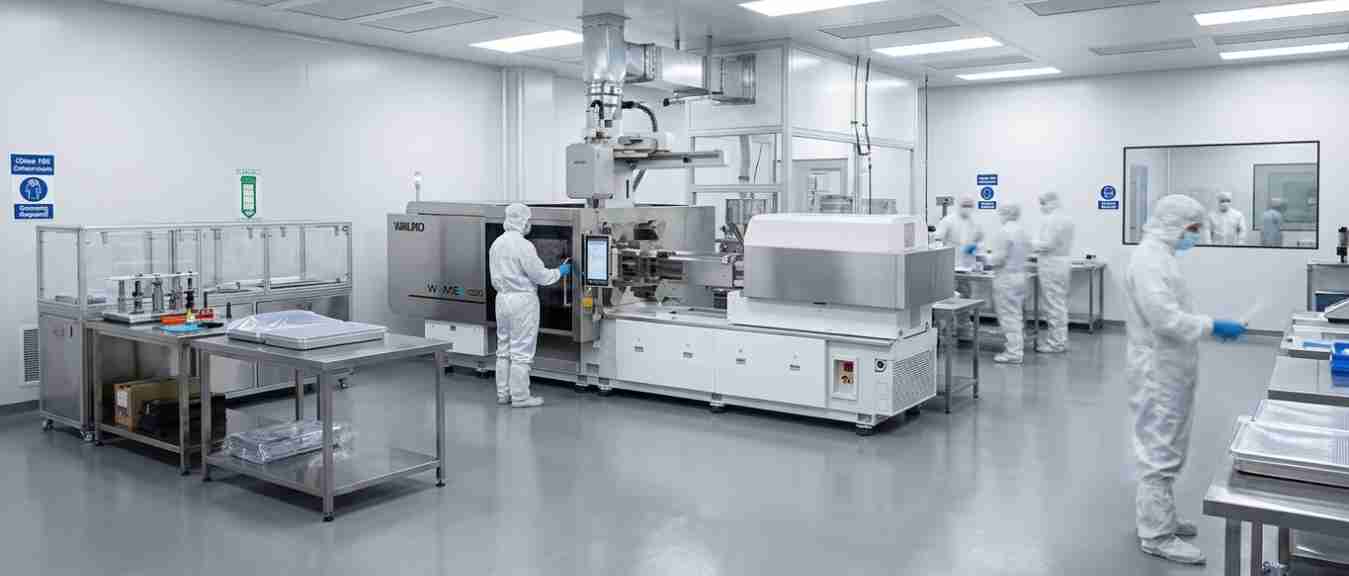
A clean room is a specially controlled environment where the concentration of airborne particles is maintained below a specific limit, and environmental parameters such as temperature, humidity, and pressure are strictly controlled. Medical manufacturing facilities adhere to the internationally recognized ISO 14644-1 standards.
Clean Room Classification (ISO Standards)
- ISO Class 5 (Formerly Class 100): These are areas requiring the highest level of sterility. The maximum allowable number of particles measuring 0.5 microns per cubic meter is very low (maximum 3,520 particles/m³). These areas are typically used for filling, capping, and critical sterile reagent contact points.
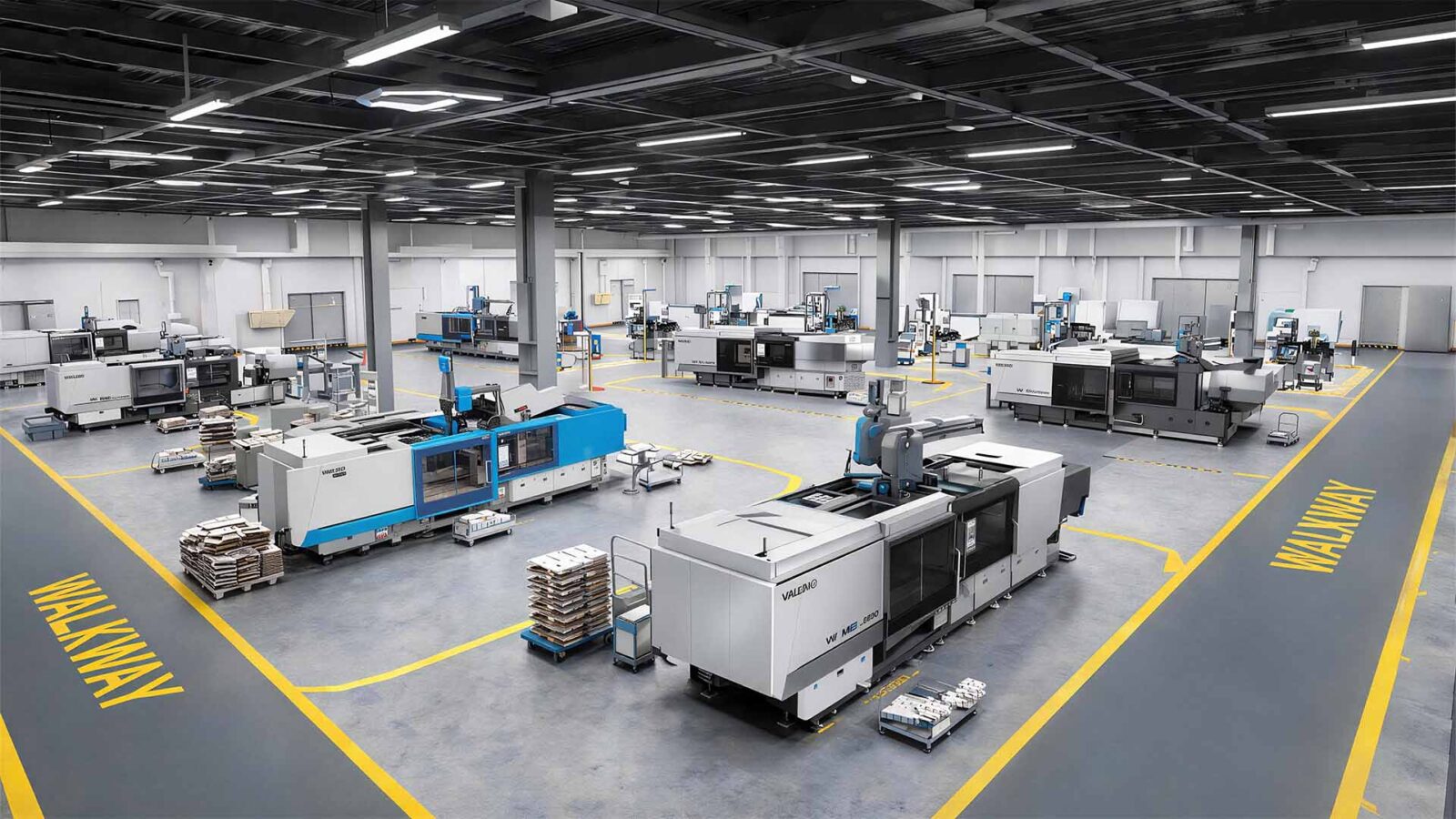
- ISO Class 7 and 8 (Formerly Class 10,000 and 100,000): These are controlled areas with broader tolerances, where injection molding, raw material preparation, packaging, and general assembly lines are located.
Basic Components of a Cleanroom
- HEPA/ULPA Filters: High-efficiency filtration systems that remove microscopic particles, bacteria, and spores from the air.
- Positive Pressure Control: Maintaining the cleanroom at a positive pressure relative to the external environment prevents contaminated air from entering when the door is opened.
- Personnel and Material Restrictions: Human-induced contamination is minimized through the use of special antistatic and lint-free clothing (coveralls, masks, gloves, caps), air showers, and pass-through chambers.
2. The Contribution of Robotic Automation Systems to Production Quality and Sterilization
Human contact on production lines for blood collection tubes or sensitive medical plastics increases the risk of microbial contamination, particle formation, scratching, or mechanical deformation. Robotic automation eliminates these risks through the following mechanisms:
a) Prevention of Human-Caused Contamination
- Eliminating human intervention on the production line completely prevents skin flakes, hair, sweat, or microorganisms from coming into contact with the product. This keeps biocompatibility and endotoxin risks to a minimum, even for products that will be sterilized later.
b) Precise Material Handling and Zero Deformation
- PET and glass blood collection tubes have very delicate wall thicknesses. Friction and impacts that may occur during transport via conventional conveyors or manual handling can lead to microscopic cracks.
- Specialized cleanroom-compatible robotic arms and pneumatic grippers transfer the tubes and caps to the conveyor systems with zero deformation, at precisely calculated speeds and accelerations.
c) Process Repeatability and High Precision
- Reagent Dosing: The precise dosing of additives (e.g., EDTA or heparin) into the tubes—down to fractions of a milligram—is achieved using robotic and electronic dosing pumps.
- Cap Sealing and Vacuuming: Calibrating the internal pressure in vacuum tubes to a standard value (for example, to draw exactly 3 mL or 5 mL of blood) can only be reliably achieved using servo-controlled robotic cap-sealing and vacuuming stations.
d) Integrated Camera Control (Vision) Systems
- Artificial intelligence-powered optical cameras integrated with robotic lines scan the amount of reagent inside the tube, the quality of the cap seal, and the accuracy of the barcode on the label within milliseconds. Defective or non-conforming products are immediately and flawlessly removed from the line by robotic sorters.