

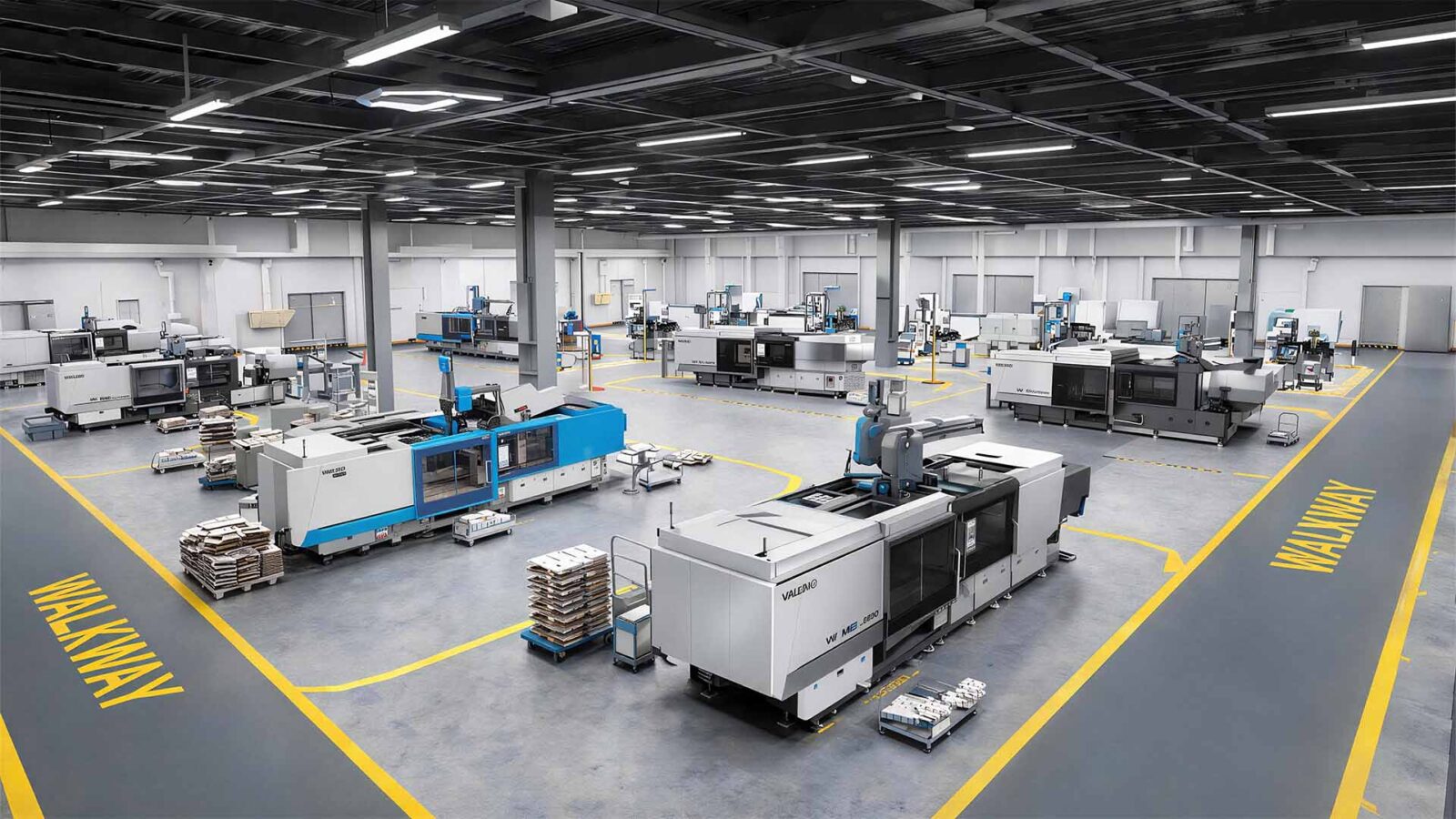
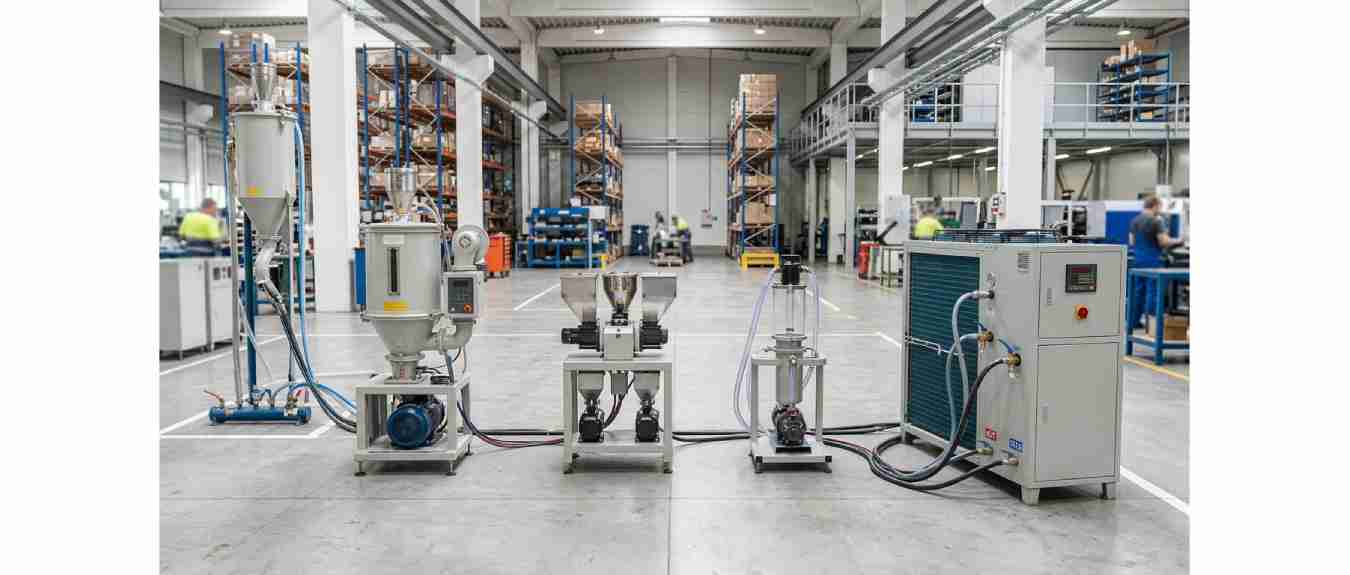
An injection molding machine cannot operate as a standalone unit on its own to achieve high-efficiency, uninterrupted production. To transform polymer pellets in their raw form into flawless final products, a complete production cell requires a supportive ecosystem consisting of auxiliary (peripheral) equipment.
These auxiliary systems manage material preparation, temperature control, automation, and quality control processes. The basic categories of auxiliary equipment required for injection molding are as follows:
1. Material Handling and Preparation Systems
Plastic must be properly stored, transported, dried, and mixed before it reaches the machine barrel:
- Material Dryers: Hygroscopic engineering plastics (such as PET, PA/Nylon, PC, and ABS) absorb moisture from the air. If not properly dried, moisture causes surface defects, bubbles, and structural weakness. Dryers circulate heated, dehumidified air through the resin prior to processing.
- Vacuum Feeders / Automatic Feeders: Automatic feeders minimize manual labor and contamination by transporting plastic pellets directly from storage bins or dryers to the machine’s hopper inlet.
- Mixers and Feeders: Volumetric or gravimetric mixers accurately blend pure resin, masterbatch (colorants), and regrind in precise ratios immediately before feeding.
2. Temperature Control Systems
Precise temperature control is essential to ensure uniform product dimensions, proper crystallization, and consistent cycle times:
- Chillers / Water Cooling Systems: Molds must continuously remove heat to rapidly solidify the molten plastic. Industrial chillers supply cold water at a constant temperature to the mold channels.
- Mold Temperature Control Units (TCUs): For applications requiring high mold surface temperatures (e.g., optical parts, high-gloss automotive components, or engineering plastics), TCUs circulate pressurized hot water or oil to maintain the mold at a precisely preset temperature.
3. Scrap Management and Recycling
- Granulators / Crushers: Defective parts, sprue, and flash are immediately fed into granulators located next to the press or in a central location to be converted into homogeneous recycled pellets by being safely remixed with pure material, thereby eliminating waste.
4. Part Removal and Automation Systems
- Part-Removal Robots and Pick-and-Place Units: High-speed 3-axis or 6-axis servo robots safely remove finished parts and sprues from the opened mold and place them onto conveyor belts or at packaging stations. This ensures consistent cycle times and protects the mold from damage.
- Conveyor Belts: They transport components that have been produced and removed from the mold away from the machine area for inspection, assembly, or packaging.
5. Mold Management and Quick-Change Systems
- Mold Change/Locking Systems: Hydraulic, pneumatic (air-powered), or magnetic locking systems significantly reduce downtime when switching between different product molds.
- Hot Runner Control Units: For molds equipped with hot runner systems, these electronic control units maintain precise temperatures in separate manifold zones to ensure the plastic remains molten within the runner channels.