

Industrial Maintenance Management in the Plastics Processing Industry: The Transition from a Reactive Approach to Smart Factories
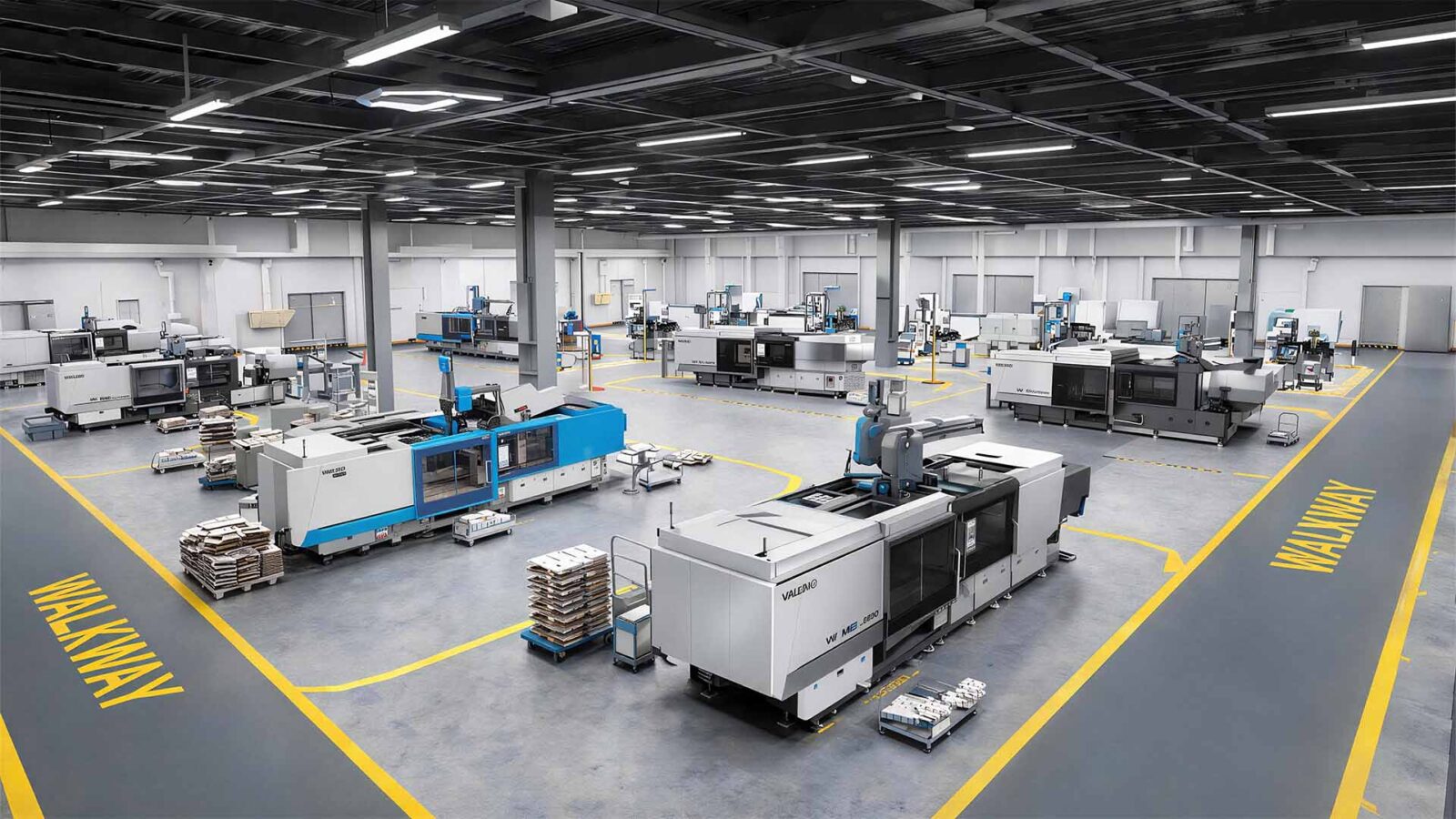
The plastics processing industry is a demanding production environment dominated by equipment—such as injection molding machines—that operates under high pressure, intense heat, and constant mechanical stress. Over time, critical components such as screws, pumps, heaters, and cooling systems inevitably undergo a process of wear and tear. In this dynamic environment, maintenance management is not merely a technical necessity; it is the fundamental determinant of operational continuity, product quality, and profitability.
1. Transition from Reactive to Preventive Maintenance
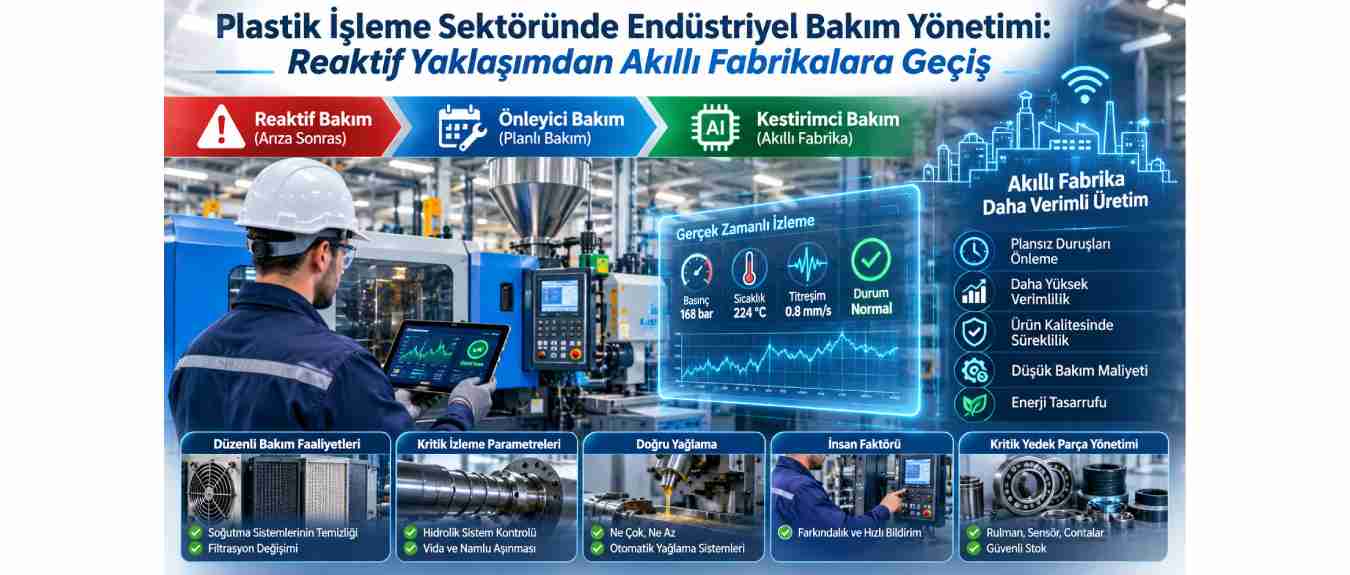
In the past, many facilities adopted a reactive (break-fix) maintenance approach, based on the principle of running equipment until it completely breaks down. While this approach, based on the “if it ain’t broke, don’t fix it” mentality, may seem appealing in the short term to avoid halting production, it leads to significant costs in the long run.
Unexpected downtime typically occurs during the most critical moments of production; emergency repairs are much more expensive than scheduled maintenance, and the failure of a single part can cause a chain reaction of damage to surrounding components, thereby extending downtime. These drawbacks have led manufacturers to adopt preventive maintenance strategies. While preventive maintenance is not a magic wand, it minimizes the likelihood of major breakdowns.
- Key Activities of Preventive Maintenance:
- Regular cleaning of cooling systems and replacement of filters
- Inspection of hydraulic hoses and electrical connections
- Inspection of heating elements and proper lubrication of moving parts
- Periodic inspections of motors and bearings
2. Critical Monitoring Parameters in Injection Molding Machines
Injection molding systems rely on a balance of pressure, temperature, and precise timing. Even the slightest deviation in these machines directly affects product quality. Therefore, close monitoring of these processes is of vital importance:
- Hydraulic Systems: Pressure imbalances and contaminated hydraulic fluid lead to cycle variability and loss of efficiency. Fluid condition, pump performance, and seal wear must be continuously monitored.
- Screw and Barrel Wear: Material friction gradually wears down the inner surfaces, destabilizing material flow. Experienced operators can detect changes in melt consistency and cycle behavior at an early stage.
- Mold Condition: Neglected molds lead to recurring production defects despite proper machine settings.
3. The Right Balance in Industrial Lubrication
Inadequate or improper lubrication remains one of the most common problems in industrial facilities. When proper lubrication is not maintained, friction increases, bearings wear out rapidly, heat buildup accelerates, and energy consumption rises.
Interestingly, over-lubrication is just as dangerous as under-lubrication; excessive use of lubricant can increase internal pressure, damaging seals and creating conditions for foreign particles to enter the system. To eliminate these human-induced risks, automated lubrication systems are becoming increasingly common in modern facilities.
4. Predictive Maintenance and Smart Factory Integration
Advances in technology have shifted the approach to maintenance from periodic schedules to predictive maintenance models. Thanks to sensors and software platforms integrated into machines, equipment performance is monitored in real time; early warning signals (excessive vibration, changes in sound, high temperature) allow for intervention before a failure occurs.
- Advantages of Smart Maintenance Systems:
- Centralized tracking of service scheduling and repair history
- Real-time equipment performance and downtime analysis
- Scheduling of maintenance activities during the least busy shifts through Smart Factory integration
- Detection of energy consumption anomalies and investment prioritization
5. The Human Factor and Critical Spare Parts Management
No automation system or software can completely replace the human factor and internal communication. Operators on the shop floor are always the first to notice even the slightest anomaly in a machine (unusual noise, odor, or vibration). Workforce awareness and a culture of quickly reporting minor issues are the greatest safeguards against major disasters.
Furthermore, the management of critical spare parts—especially for older machines—must not be neglected. Maintaining a secure on-site inventory of critical parts such as bearings, heating elements, sensors, hydraulic seals, motors, and filters prevents prolonged downtime caused by long lead times.