

Urine Container Manufacturing Technology and Production Line Setup: A Comprehensive Guide
Introduction
The medical consumables sector is growing rapidly due to global population growth, rising healthcare investments, and increasing demand for laboratory tests. At the center of this growth are urine containers, essential medical products of critical importance in clinical diagnosis, laboratory research, and routine health screenings. Setting up an accurate urine container production line is a multidisciplinary process requiring high precision—ranging from raw material quality and cleanroom standards to injection molding machines and automation systems.
1. What is a Medical Urine Container and What Are Its Standards?
A urine container is a medical product designed for the safe collection, storage, and transport of urine samples for diagnostic, clinical, or research purposes.
- Material Purity and Stability: Manufactured from food- and medical-grade, inert (non-reactive) plastic raw materials to ensure that the chemical structure of the samples is not compromised and does not react with external factors.
- Leak-Proofing and Safety: Features leak-proof cap designs to prevent contamination. In most clinical uses, products are supplied in a sterilized state.
- Ergonomics: Designed to offer safe, hygienic, and easy use for both patients and healthcare professionals.
Standard volumes commonly in demand stand out as 60 ml, 90 ml, and 120 ml.
2. Raw Material and Product Structure
Urine containers mainly consist of two parts: the Body (Container) and the Cap.
- Polymers Used: Polyethylene (PE) and Polypropylene (PP) are generally preferred for production. These polymers possess high chemical resistance, transparency (for the body), and impact strength.
- Manufacturing Method: Both the body and the cap are produced using high-precision injection molding technology.
3. Machinery and Equipment Requirements for a Urine Container Production Line
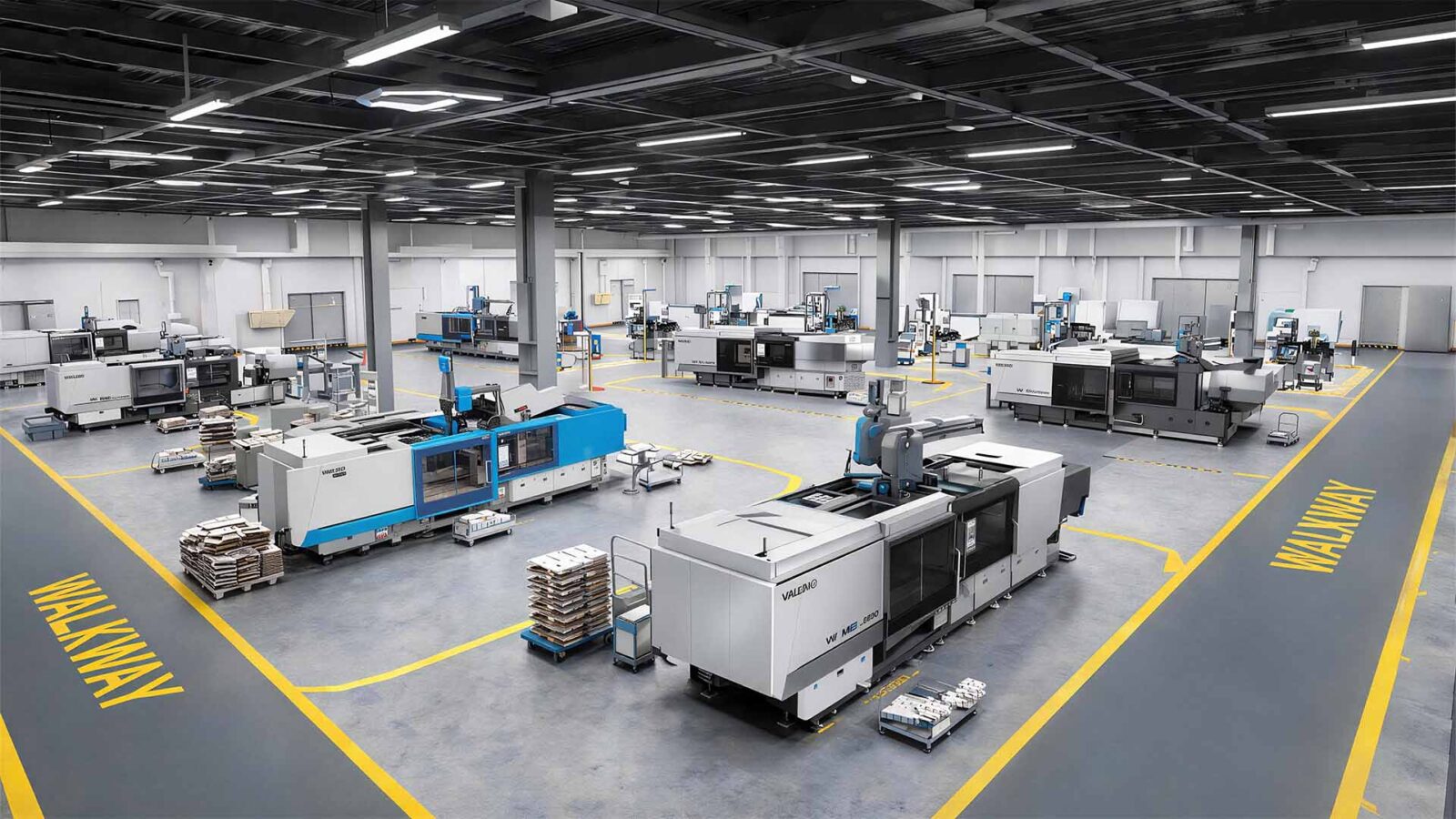
Compliance with international quality standards and GMP (Good Manufacturing Practices) is mandatory in medical device manufacturing. The critical machinery and equipment required in a fully equipped urine container production line include:
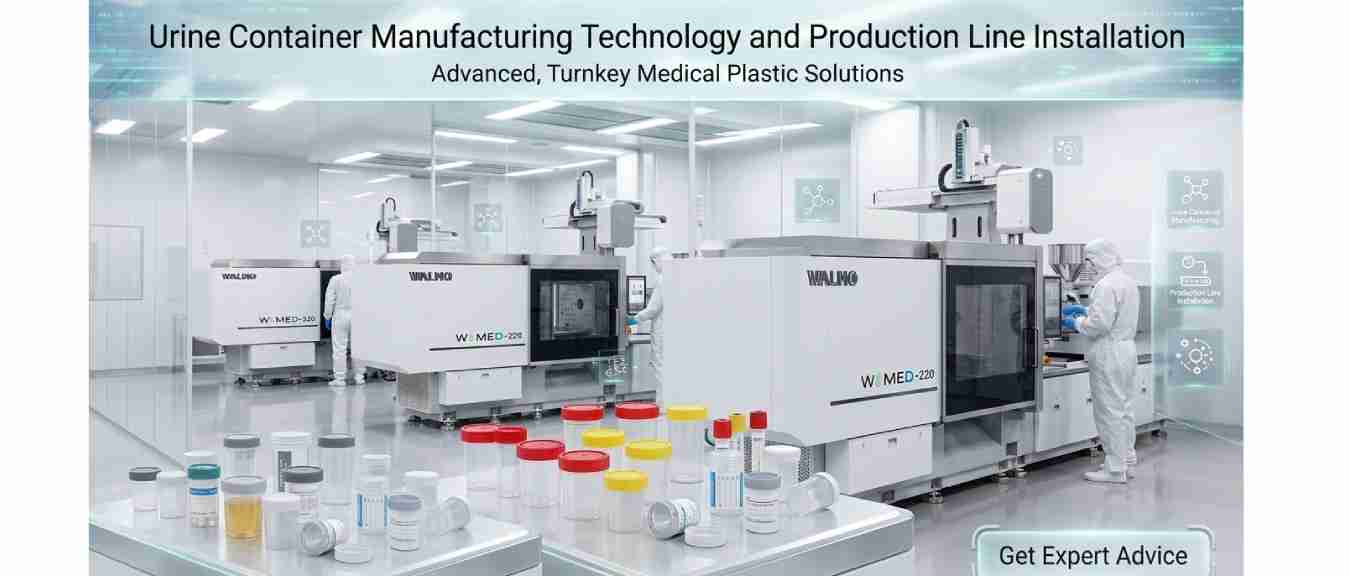
- Medical-Grade Electric Injection Molding Machines: High-efficiency and high-precision electric injection machines, preferably cleanroom-compatible (generally ranging from 80 to 220 tons of clamping force depending on mold size and production capacity).
- Multi-Cavity Molds: High-quality molds specifically designed for bodies and caps, typically 8-cavity systems.
- Hot Runner Systems: For material savings and homogeneous injection.
- Hopper Dryers and Vacuum Auto-Loaders: To ensure moisture-free and flawless feeding of raw materials.
- Air-Cooled Chiller Units: For balancing mold temperatures and shortening cycle times.
- Granulator (Crusher): To recycle production waste plastics.
- Leak Testing Devices: Quality control units to 100% verify the leak-proof performance of containers.
- Labeling and Printing Machines: For printing barcodes, graduation lines, and brand logos.
- ETO Sterilization Cabinet: The necessary medical sterilization unit if the sterilization process is performed in-house.
- Cleanroom (ISO 7 or ISO 8): A dust-free area for conducting final packaging and sealing processes in a hygienic environment.
4. Production Systems and Configuration Options
Depending on capacity and budget, two basic production models can be implemented in a urine container manufacturing facility:
a. Production with a Single Injection Machine: Using a single machine, bodies and caps are produced in separate time frames. This method requires mold changes during transitions between parts.
b. Simultaneous Production with Dual Injection Machines (Recommended High Capacity): Using two separate injection machines, bodies are produced in one machine and caps in the other simultaneously. This system can be supported by automation integration to perform the assembly of the body and cap automatically through a single line.
Frequently Asked Questions (FAQ)
What raw materials are used in urine container manufacturing?
Medical-grade Polypropylene (PP) and Polyethylene (PE) raw materials are used for the body and cap parts of urine containers.
How many tons of injection machine is required for the production line?
Depending on product sizes and mold cavity counts, electric injection machines with a clamping force generally ranging from 80 to 220 tons are preferred.
Why is the cleanroom requirement important?
Medical diagnostic products must be free from contamination. To ensure full compliance with GMP and ISO standards, packaging and final processes must be carried out in ISO 7 or ISO 8 class cleanrooms.
Conclusion
Urine container manufacturing is a profitable medical investment area requiring high automation, strict quality control, and the right machine park. To get professional support regarding turnkey projects, mold optimization, and the most suitable injection molding technologies, you can contact ELVER Machine.