

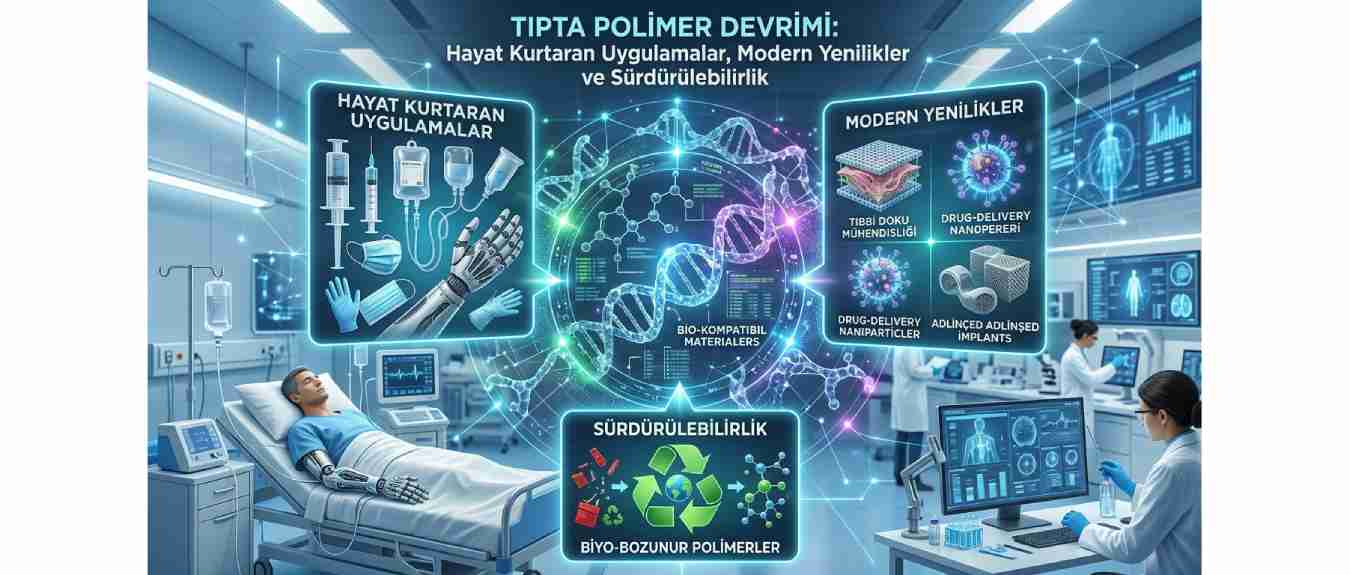
The Polymer Revolution in Medicine: Life-Saving Applications, Modern Innovations, and Sustainability
Polymer technology plays a critical role in every area of healthcare today. From improving hygiene standards to providing wear resistance, and from cost-effectiveness to innovative treatment methods, plastics offer solutions to many challenges and have become an indispensable part of the medical world—ranging from disposable syringes to biocompatible prosthetics. This article comprehensively examines the role of plastics in modern medicine, their life-saving applications, future technological trends, and approaches to environmental sustainability.
1. The Fundamental Role of Plastics in Modern Medicine and Hygiene Standards
Plastic materials form the backbone of modern medicine, ranging from surgical instruments to sterilization-compatible containers and protective packaging. Their lightweight, durable nature, low electrical and thermal conductivity, and ease of shaping make them ideal for the manufacture of medical devices.
One of the greatest advantages of plastic in the healthcare sector is that it ensures a high level of hygiene and safety. Flexible and durable polymers such as polyethylene (PE), polypropylene (PP), PVC, and silicone have been optimized to minimize the risk of infection in accordance with epidemiological studies. From gloves used during patient procedures to medical instruments, many plastic components serve as vital barriers in preventing cross-contamination.
2. Single-Use Medical Products and Infection Control
In the past, reusing medical instruments in surgeries after repeated sterilization was both time-consuming and, in some cases, a risky process in terms of completely eliminating microorganisms. Today, however, the introduction of single-use (disposable) plastic products has revolutionized infection control.
- Syringes and Needles: Sterile syringes and needles made of flexible plastic have dramatically reduced the transmission rates of pathogens such as hemophilia, hepatitis C, and HIV.
- Serum Bags and Catheters: Single-use fluid transfer systems ensure patient safety by reducing the rates of hospital-acquired (nosocomial) infections.
3. Medical Packaging and Sterile Storage
It is critical for patient health that medications and sensitive medical supplies remain sterile until they are used. Plastic packaging technologies protect products from moisture, contamination, and microorganisms in the external environment.
- Blister Packaging and Bottles: Plastic blister systems used in the packaging of pharmaceutical products protect the active ingredients of medications from external factors while maintaining dose integrity.
4. Advanced Prosthetics and Implants
Advances in polymer technology have fundamentally transformed the prosthetics and implants sector. Lightweight, durable, and biocompatible engineering plastics—which have replaced traditional materials such as wood and metal—have made it possible to produce artificial limbs that perfectly mimic the mobility of human anatomy.
- 3D-Printed Prosthetics: The integration of 3D printing technology with polymer science has accelerated the production of custom-designed, low-cost, and comfortable prosthetics. As a result, patients can regain their freedom of movement much more quickly than before.
5. Surgical Instruments and Minimally Invasive Devices
Forceps, clamps, and endoscopic accessories used in surgical procedures are manufactured from high-quality engineering plastics.
- Ergonomics and Lightweight Design: Plastic surgical instruments are lighter than their metal counterparts; this reduces physical fatigue for surgeons during complex operations that last for hours.
- Minimally Invasive Surgery: Flexible endoscopic equipment used in procedures performed through small incisions significantly shortens patients’ postoperative recovery times (postoperative comfort).
6. Controlled-Release Drug Delivery Systems
Plastics form the basis of advanced drug delivery systems that ensure active ingredients are administered to the body at the desired dose and over the desired time period.
- Transdermal Patches and Inhalers: Plastic-bodied inhalers used for respiratory diseases or flexible transdermal patches applied to the skin to provide long-term drug release enhance treatment success while facilitating patient compliance.
- Intravenous Systems: IV sets and infusion pump components ensure that medications are delivered safely and in a controlled manner into the circulatory system.
7. Biodegradable and Biocompatible Polymers
Biodegradable and biocompatible materials have been developed to optimize the effects of medical plastics on the environment and the human body.
- Biodegradable Implants: Some polymeric implants used to stabilize bones during the healing process dissolve and break down inside the body over time. This eliminates the need for patients to undergo a second surgical procedure to remove prostheses or support materials, thereby reducing costs and minimizing patient trauma.
8. Personal Protective Equipment (PPE)
During crises and in daily clinical practice, face masks, face shields, protective gowns, and gloves play a vital role in protecting healthcare workers and patients. These plastic-based personal protective equipment items—which are lightweight, durable, and provide a high level of protection—constitute the most fundamental line of defense in breaking the chain of transmission of infectious diseases.
9. Technology of the Future: Smart Plastics
The future of the medical sector is built on “smart plastics” that can respond to external stimuli. Scientists are developing polymers capable of changing color, actively releasing medication, or reporting biological data. For example, smart wound dressings that change color upon detecting infection risk, or wearable medical technologies that provide real-time health data, are breaking new ground in personalized medicine.
10. Environmental Challenges and Sustainable Solutions
Single-use plastics—which are indispensable in medicine (particularly PE and PP waste)—pose serious environmental challenges in terms of waste management. Striking a sustainable balance without compromising hygiene and sterilization requirements in the healthcare sector is of vital importance. Today, hospitals and healthcare facilities are implementing advanced recycling programs, optimizing medical waste sorting systems, and investing in biocompatible and biodegradable alternatives to reduce their ecological footprint.
Conclusion
Plastic polymers are the building blocks of the modern medical industry, ranging from disease prevention to surgical procedures, and from advanced prosthetics to smart drug-delivery systems. When combined with the unique clinical advantages they offer and the smart, biodegradable materials of the future, they will continue to enhance human health and quality of life in the medical sector. Sustainability-focused waste management policies will ensure that this technological progress is maintained through an environmentally friendly approach.