

The plastics manufacturing sector is seeking new solutions every day in the face of intense competition, tightening environmental standards, and rising energy costs. Undoubtedly, one of the most significant actors in this transformation is all-electric injection molding machines.
Rapidly replacing traditional hydraulic machines, electric systems are setting a new industry standard in precision, energy efficiency, and sustainability.
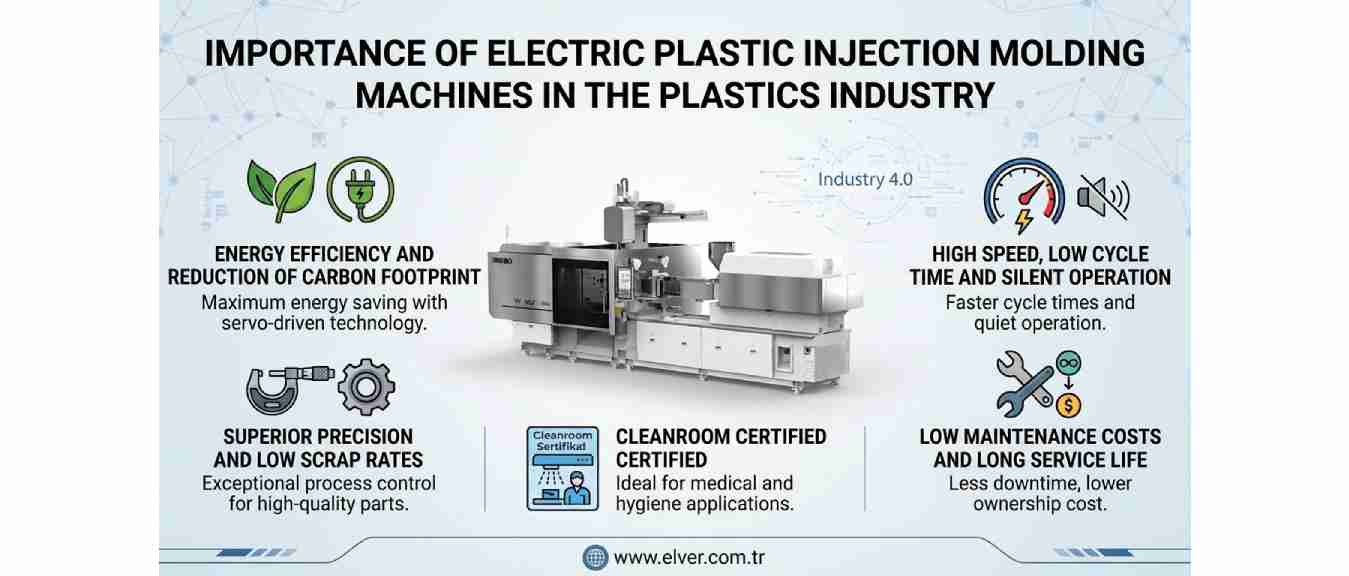
1. Energy Efficiency and Carbon Footprint Reduction
In traditional hydraulic injection molding machines, the hydraulic pump runs continuously—even during the machine’s idle or cooling phases—consuming a significant amount of energy. In electric machines, however, servomotors consume power only during movement.
- 50%–70% Energy Savings: Electric machines significantly reduce energy bills by preventing heat loss and unnecessary motor operation.
- Carbon Footprint: Reducing energy consumption in manufacturing plants directly contributes to corporate sustainability goals and global “Green Deal” standards.
2. Superior Precision and Lower Scrap Rates
Servomotor technology controls the screw, injection unit, and clamping movements with millisecond and micron-level precision.
- Repeatability: Because the same pressure and position are guaranteed in every shot, product defects (such as flash, short shots, sink marks, etc.) are minimized.
- Medical and Optical Sectors: In the production of high-precision medical device parts, connectors, or optical lenses that require tight tolerances, electric machines have become a necessity rather than an option.
3. Cleanroom Compatibility and Hygiene
The risk of oil leaks, oil mist, and high operating temperatures in hydraulic machines pose serious challenges for hygiene-critical industries.
- Oil-Free Operation: Since hydraulic oil is not used in electric machines, the risk of in-plant contamination is eliminated.
- Medical and Food Packaging: Electric machines offer an ideal structure for “Sterile Cleanrooms,” where medical equipment and food-contact packaging are produced.
4. High Speed, Reduced Cycle Time, and Quiet Operation
In electric machines, servomotors can operate independently. This allows operations such as mold opening, ejector operation, and plasticization (dosing) to be performed simultaneously (in parallel).
- Reduced Cycle Time: Thanks to simultaneous movements, cycle times are shortened, resulting in higher production capacity per unit of time.
- Low Noise Level: Compared to the noisy operation of hydraulic pumps, electric machines run remarkably quiet, enhancing workplace comfort.
5. Low Maintenance Costs and Long Service Life
One of the largest cost items for hydraulic systems is oil replacement, filter maintenance, and the renewal of seals.
- Electric machines eliminate the massive water and energy demand required for cooling hydraulic oil.
- The absence of hydraulic failures and leaks minimizes downtime, ensuring uninterrupted production.
In Summary: The Future of the Plastics Industry
Although all-electric injection molding machines may appear to have a higher initial investment cost compared to hydraulic machines, they quickly pay for themselves through low energy consumption, near-zero scrap rates, and high production speeds.
Positioned at the heart of Industry 4.0 and the green manufacturing transformation, these machines represent a strategic investment for plastics manufacturers aiming to maintain competitiveness in the market and build a sustainable future.