

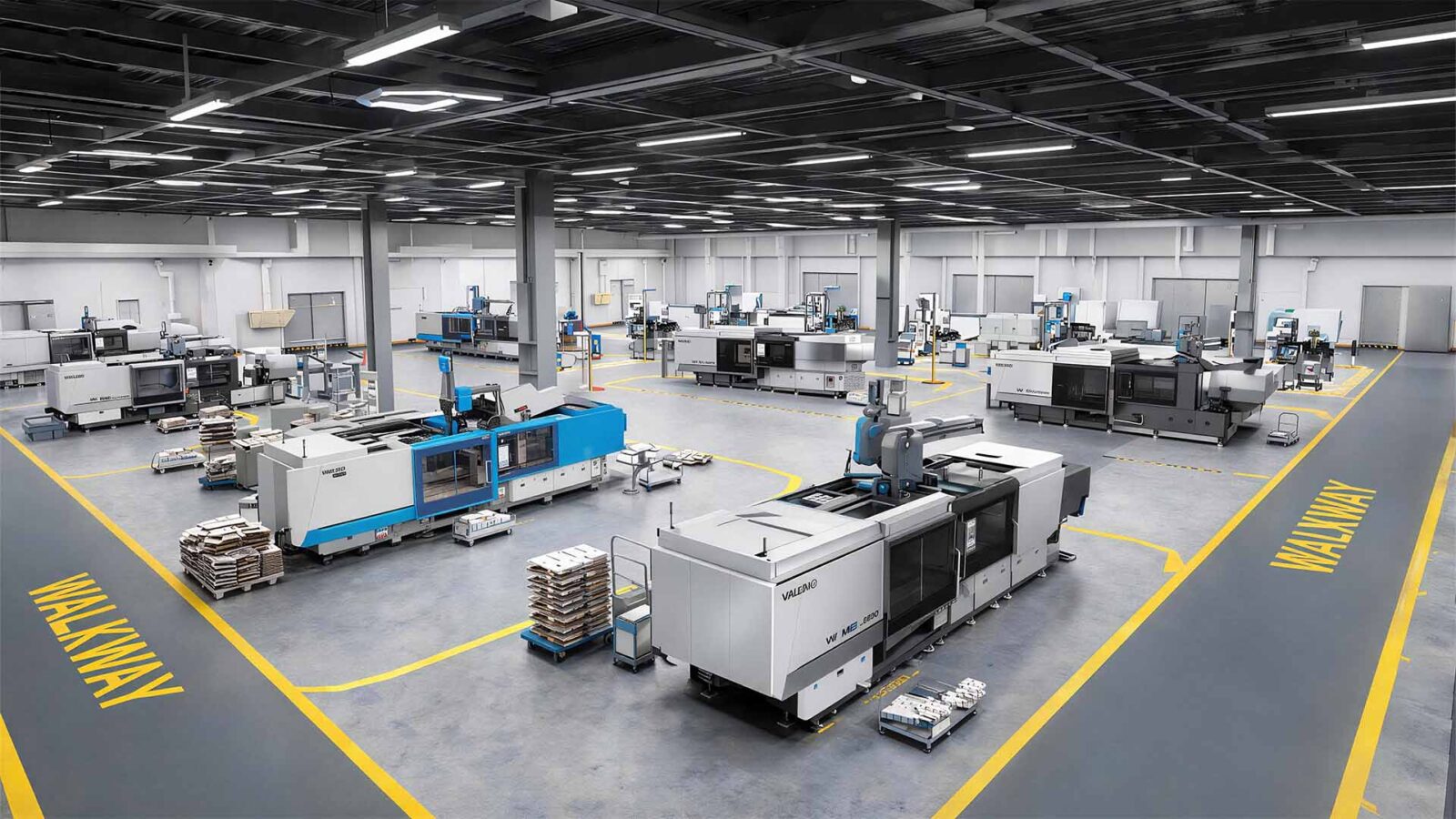
Today, the increasing variety of plastic raw materials has directly shaped the processing methods of these materials and the technology of plastic molding machines. Injection molding machines, which lie at the center of these technologies, enable the mass production of more durable and high-precision products across many critical sectors such as automotive, electrical-electronics, consumer goods, construction, and aviation.
In traditional injection machines, control processes were largely carried out manually or via hydraulic systems. However, today, fully electric injection molding machines—surpassing hydraulic and hybrid systems—have set a new standard in production efficiency by minimizing human-dependent reliance, time loss, and energy consumption.
Offering high energy efficiency, sub-millimeter precision, and process stability, electric injection molding machines are rapidly increasing their market share. Accordingly, ELVER Machine presents this review series focusing on electric injection molding technologies to help users and industry professionals more easily grasp the engineering infrastructure and working principles of these machines.
1. Characteristics and Operating Principles of Main Components
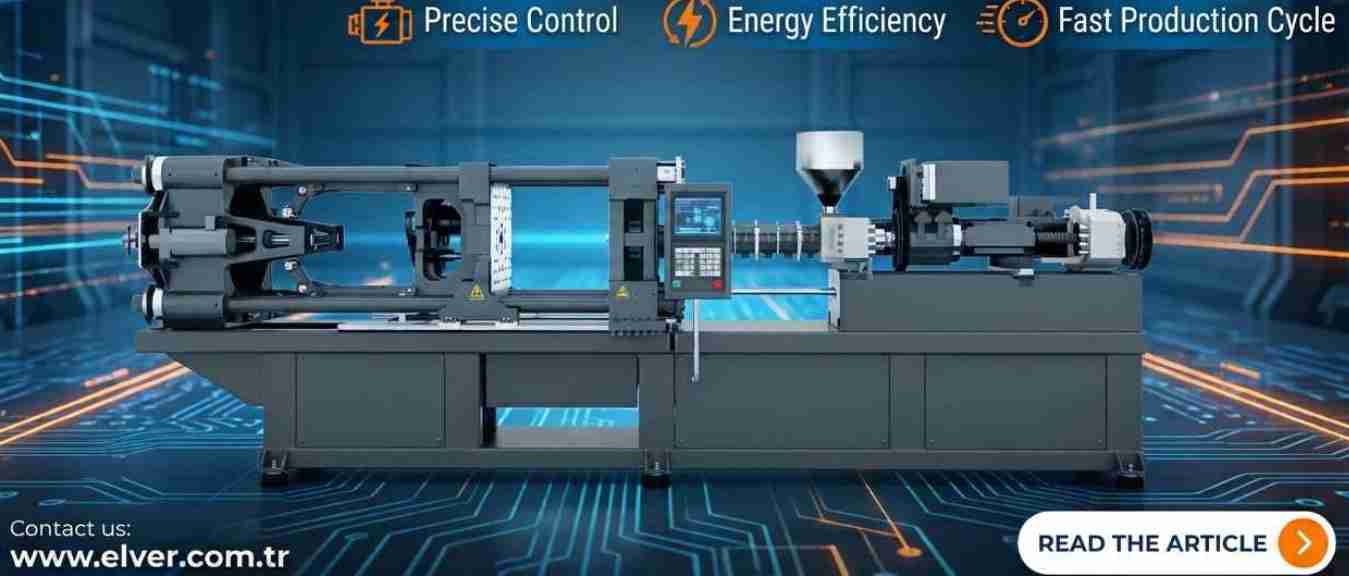
One of the most critical modules of electric injection molding machines is the Clamping Unit. This unit consists of a stationary mold platen, a moving mold platen, a clamping mechanism group, and a mold height adjustment group. Its primary function is to keep the mold closed during high-pressure injection and steadily maintain the designated clamping force.
[Servo Motor] ➔ [Ball Screw] ➔ [5-Point Toggle] ➔ [Linear Platen Movement]
1.1 Clamping Mechanism Group
In electric systems, motion transmission is provided by high-precision conversion elements:
- Operating Principle: When the molding cycle starts, the servo motor generates rotational motion.
- Linear Conversion: This rotational motion is converted into high-precision linear motion via a ball screw.
- Force Transmission: The linear motion is transmitted to the moving platen through a 5-point toggle linkage system, ensuring the mold closes and locks securely.
Important Technical Consideration (Tie-Bar Elongation): When clamping force is applied, the machine’s four main tie-bars elongate at a micro-level. The mechanical force accumulated during this elongation prevents molten resin from leaking out of the mold (flash formation). It is critical that all four tie-bars elongate at the exact same rate. Millimetric imbalances between the tie-bars can lead to product surface defects and permanent damage to the machine mechanics.
1.2 Mold Height Adjustment Group
Designed to rapidly adapt to different mold sizes and thicknesses, this group consists of a rear platen, gear mechanisms, and a geared motor. When the mold is attached to the platens, the system automatically detects the targeted clamping force and performs mold height adjustments with high precision.
1.3 Ejection Mechanism Group
Ensures the smooth removal of the finished product from the mold after the molding and cooling stages are completed:
- The moving platen retracts.
- The ejector system moves under millimetric control using a combination of a servo motor and a ball screw to push the product out of the mold cavity.
- Thanks to servo motor control, the ejection speed and force can be adjusted precisely, preventing the deformation of delicate or thin-walled products.
Conclusion
Electric injection molding machines directly respond to the precision and energy-saving demands of modern manufacturing thanks to the high control capability provided by servo motor technology and mechanical conversion elements (ball screws, toggle systems). This electrical transformation in the clamping and ejector units provides manufacturers with a sustainable competitive advantage by offering lower maintenance requirements and higher repeatability.