

How to Start a Plastic Pallet and Crate Manufacturing Business?
In the logistics and manufacturing sectors, certain industrial products often remain in the background, yet they are vital for the smooth execution of operations. Plastic pallets and crates are two indispensable elements of material storage and shipping processes across almost every industry.
While consumer products attract more attention due to their high sales volumes and popularity, industrial products like pallets and crates cater to a niche and focused market. Despite this, it is a highly profitable, stable, and less competitive field. Moreover, manufacturing these products domestically instead of importing them provides businesses with a significant advantage in terms of cost and operational flexibility.
What is a Plastic Pallet?
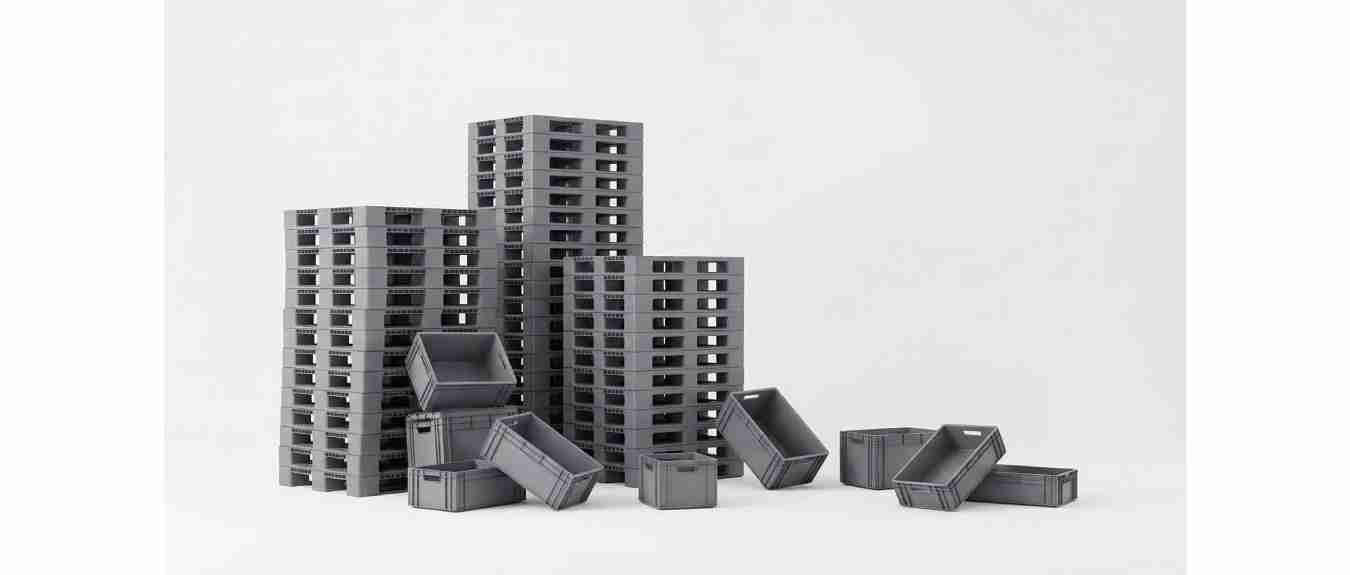
A plastic pallet is a flat, horizontal platform used to support materials during storage, stacking, and transportation processes. It is designed to be easily lifted by forklifts or pallet jacks, making the transport of heavy or fragile goods much more practical and secure.
Traditionally, industrial pallets were made of wood or metal; today, however, plastic pallets are primarily preferred due to the significant advantages they offer. Extremely durable, these pallets are resistant to moisture and chemicals; they do not rot like wood, nor do they rust like metal.
Furthermore, the hygienic and easy-to-clean nature of plastic pallets makes them indispensable, especially for sensitive industries such as food and pharmaceuticals. Another major advantage is that they are reusable and recyclable, helping to reduce environmental impact.
In short, it is almost impossible to run modern logistics and warehousing operations in warehouses, factories, and cold storage facilities without pallets.
Types of Plastic Pallets
Plastic pallets used in industrial logistics and warehousing operations are divided into various categories based on their areas of use, load capacities, and design structures. Choosing the right pallet is of great importance in terms of shelf life, transport safety, and cost optimization.
Here are the details of the most common types of plastic pallets and their features:
1. Pallet Types by Structural Design
- Solid Deck Pallets: These are pallets with a completely flat and smooth top surface. They prevent small products, such as liquid or food packages, from tipping over, are easy to clean, and are ideal for hygienic environments.
- Perforated / Open Deck Pallets: These are models featuring ventilation holes or grid gaps on their top surface. They are lightweight, provide air circulation (suitable for cold storage facilities), and prevent liquid accumulation.
- Lip / Border Pallets: These are pallets with small protrusions (lips) on the edges of the top surface that prevent loads from sliding. They enhance safety, especially when transporting stretch-wrapped loads.
2. Pallet Types by Purpose of Use and Durability
- Heavy-Duty / Rackable Pallets:
- These are high-strength pallets suitable for storage in high-bay racking systems.
- They can contain steel reinforcement bars inside, allowing them to carry tons of weight without bending.
- Medium-Duty / Stackable Pallets:
- Used for general storage, stacking, and standard shipments.
- When stacked on top of one another, their base structures allow them to fit securely together.
- Light-Duty / Export Pallets:
- Lightweight and economical models generally preferred to reduce costs in one-way (single-trip) export shipments.
- They are low cost, but not suitable for heavy racking systems.
3. Pallet Types by Bottom Base Configuration
- Nested Pallets: They have foot supports on the bottom and are not skid-based. Since empty ones can nest inside each other, they provide major savings in warehouse space and return logistics.
- Skidded Pallets (2-Skid / 3-Skid): They have runners (skids) running lengthwise along the bottom. They are highly compatible with roller racks and chain conveyor systems.
- Perimeter Base / Full Frame Pallets: These are pallets whose bottom base forms a complete frame. They distribute the load perfectly and provide maximum stability against forklift forks.
What is a Plastic Crate (Box)?
Plastic crates (boxes) are durable containment vessels used to safely store and transport particularly delicate, fragile, or perishable products. Depending on needs, they are produced in different design combinations such as perforated (open), solid (closed), stackable, or foldable.
- Perforated (Open) Crates: They provide easy access to the products inside and effective ventilation. Thanks to these features, they are ideal especially for fresh foods that require airflow.
- Solid (Closed) Crates: They offer a secure storage and shipping environment by protecting the contents from external factors, contamination, and impacts.
- Stackable Crates: They allow vertical space to be used most efficiently in warehouses and transport vehicles, thereby maximizing storage capacity.
The usage areas of plastic crates are quite wide; they are indispensable for the dairy and beverage industry, agriculture (fruits and vegetables), fisheries, retail distribution, electronics, and fast-moving consumer goods (FMCG) sectors. Just like plastic pallets, crates minimize product damage, facilitate inventory management, and increase operational efficiency.
The main stages of production are as follows:
- Raw Material Selection and Preparation: Depending on the intended use of the product (load capacity, impact resistance, and outdoor conditions), appropriate polymer granules such as HDPE (High-Density Polyethylene), PP (Polypropylene), or reinforced GFPP are selected. Raw materials are passed through drying units to remove moisture.
- Melting and Plasticization: The selected granules are heated in the barrel of high-tonnage injection molding machines and turned into a homogeneous paste with the help of a screw.
- Injection and Molding: The molten plastic is injected under high pressure into special steel pallet or crate molds. The design of the mold determines the product’s grid, flat-bottomed, or heavy-duty structure.
- Cooling and Ejection: The product pressed into the mold is rapidly cooled via cooling channels so that it maintains its structure and hardens. Then, the mold opens, and the product is ejected from the mold (with the help of automated robots or ejector pins).
- Quality Control and Shipment: Every pallet and crate produced is inspected for load strength, dimensional accuracy, and surface defects. Products that pass the tests are packaged and shipped to warehouses or directly to industrial customers.
Local and Global Market Opportunities
Plastic pallet and crate manufacturing is a strategic sector with high growth potential in both local and global markets, driven by the transformation of global supply chains and sustainability regulations.
The main opportunities, dynamics fueling the sector, and competitive advantages in the local and global markets are as follows:
1. Local Market Opportunities
The demand for plastic pallets and crates in the local market is continuously increasing due to plastic replacing traditional wooden packaging and the growth of industrial production.
- Agriculture and Cold Storage Warehousing: In the transportation of fruits, vegetables, citrus, and seafood, plastic crates have become standard thanks to their hygienic properties, resistance to moisture, and perforated designs that prevent decay.
- Hygiene Standards in the Food and Pharmaceutical Sectors: Against the risks of wooden pallets harboring bacteria, splintering, and rotting, food safety (HACCP) and pharmaceutical/healthcare standards (GMP) make the use of plastic products mandatory.
- E-Commerce and Retail Logistics: With the rise of automated storage and moving conveyor systems, the need for plastic pallets and foldable crates with fixed dimensions (dimensional precision) is rising rapidly.
- Domestic Manufacturing Advantage over Importation: Importing high-volume plastic products is not economical due to freight costs. Domestic production offers customers lower logistics costs and faster delivery advantages.
2. Global Market Opportunities and Export Dynamics
The global plastic pallet market is projected to grow at a compound annual growth rate (CAGR) of approximately 5-6%, driven by increasing global trade volume and tightening environmental standards.
- ISPM 15 Standards and Bureaucracy-Free Export: Wooden pallets require heat treatment or fumigation (ISPM 15 certification) in international transport. Because plastic pallets are completely exempt from this restriction, they provide exporters with significant time and unit cost advantages at customs.
- Lower Freight Costs: Plastic pallets and foldable crates being lighter than their wood or metal counterparts reduces total cargo weight in air and maritime transport, which directly decreases shipping costs.
- Circular Economy and Recycling (Green Deal): Especially in the European Union market, the demand for sustainable pallets and crates made from recycled plastic polymers (rHDPE/rPP) is booming. Reusable packaging systems are the top choice for global companies looking to lower their carbon footprint.
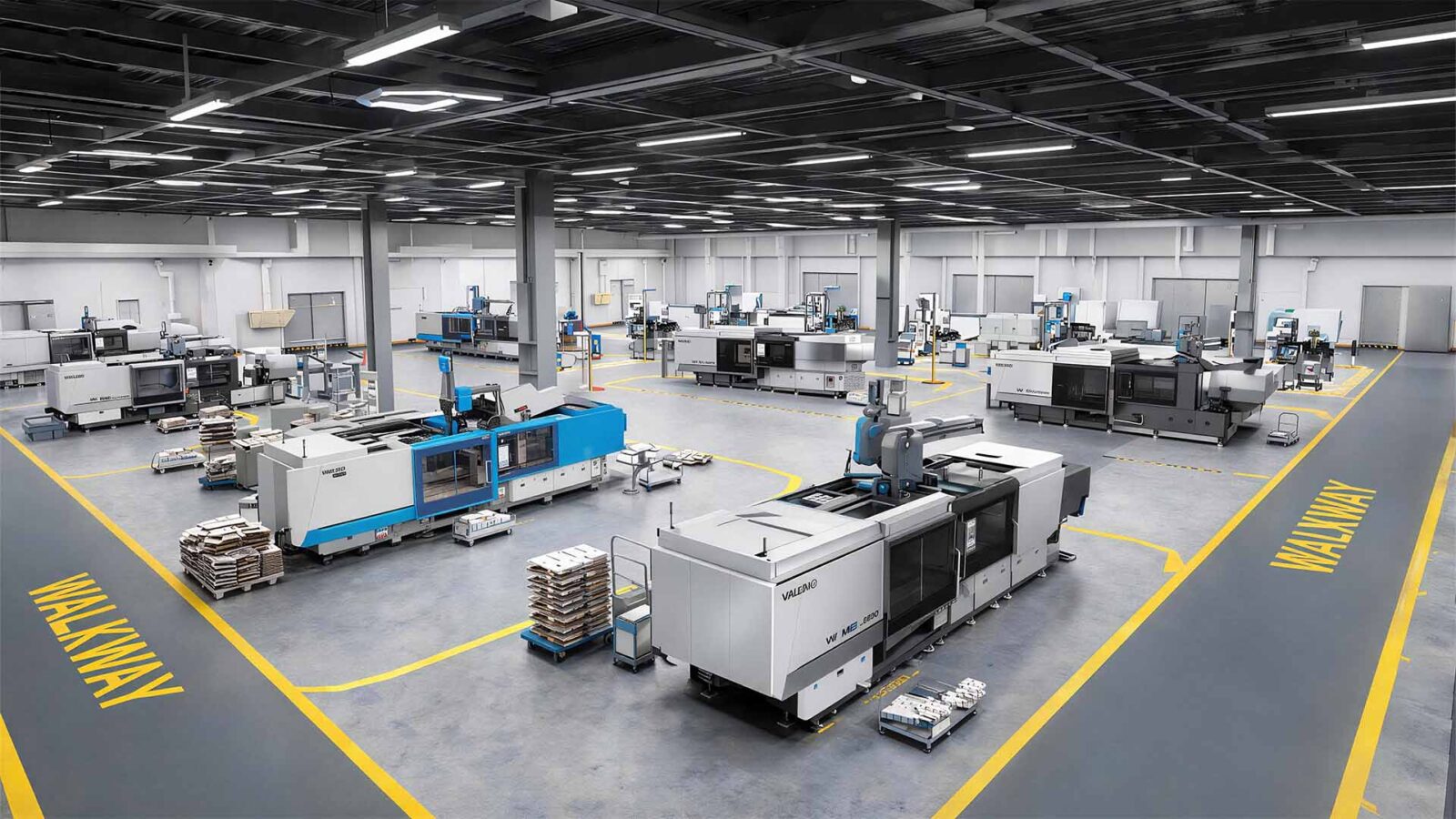
Required Machinery and Equipment for Plastic Pallet and Crate Production
Setting up a plastic pallet and crate manufacturing facility requires the following essential machinery, molds, and auxiliary equipment:
1. Plastic Injection Molding Machines
- Two-Platen Injection Molding Machine (~2400 Tons): Ideal for manufacturing large-sized plastic pallets thanks to its high clamping force and large mold platen area.
- Hydraulic / Hybrid Injection Molding Machine (~500 Tons): Suitable for plastic crate production requiring high speed and precision.
2. Production Molds
- High-strength steel molds custom-manufactured for each pallet and crate design ensure the dimensional accuracy and mechanical durability of the products.
3. Auxiliary Equipment
Peripheral equipment that supports the main production line and ensures continuous, efficient operation:
- Hopper Dryer: Removes moisture from polymer granules to prevent gas bubbles and surface defects during production.
- Vacuum Auto-Loader: Automates the raw material feeding process to ensure a continuous material flow.
- Air / Water-Cooled Chiller: Keeps the mold temperature at an optimal level to shorten cycle time and maintain product quality.
- Plastic Granulator / Crusher: Recycles defective products and sprues/runners to reintroduce them into production.
4. Automation Systems (Optional)
- Cartesian / Robotic Part Removal Systems: Automatically retrieves the finished product from inside the mold, reducing reliance on labor, optimizing the production cycle time, and enhancing workplace safety.
Turnkey Installation Support: Elver Makine provides complete solutions encompassing the supply of all plastic injection molding machines, custom molds, and auxiliary equipment, as well as plant installation, staff training, and local after-sales service support.