

Medical Media and Industrial Production Guide: Disposable Syringe (Injector) Plant Setup and Manufacturing Technologies
The advancement of the global healthcare sector, the tightening of infection control protocols, and particularly the complete elimination of risks associated with reusable glass syringes have elevated the demand for disposable injectors to a strategic level. The production of disposable syringes, which are essential components of basic drug infusion and injection processes in medical and veterinary fields, requires the seamless integration of precision plastic injection technology, automation, sterilization, and Clean Room standards.
In this article, every aspect of disposable syringe manufacturing—ranging from raw material requirements and mold architecture to machinery lines and factory capacity planning—is examined in industrial detail.
1. Material Structure and Syringe Configurations
The primary raw material used in syringe manufacturing is Polypropylene (PP). PP is the standard material of the medical plastics industry due to its ability to be sterilized under heat and pressure, suitability for antibacterial processes, biocompatibility, and economic structure.
The components and raw material distribution used in production are as follows:
- Barrel: Polypropylene (PP) providing high transparency and chemical resistance.
- Plunger: PP or, in certain special designs, Polyethylene (PE).
- Stopper (Sealing Element): Elastomer (TPE/Synthetic Rubber) raw materials used to ensure sealing in three-piece injectors.
Design Types and Tip Structures
Depending on market demands, plant setup targets two different syringe structures and various tip configurations:
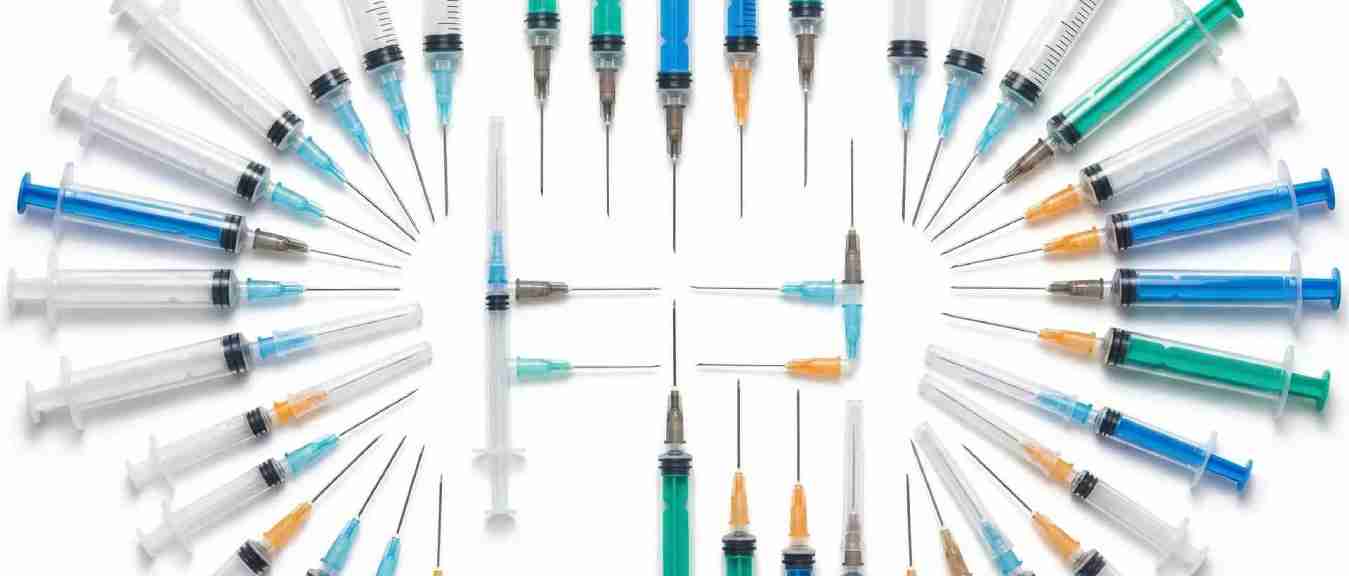
- Two-Piece Syringes: Consist of 2 basic components: the barrel and the plunger.
- Three-Piece Syringes: Consist of the barrel, plunger, and an additional elastomer stopper ensuring leak-proof performance.
Tip Options:
- Luer Slip: Standard slip-on connection tip.
- Luer Lok: Secure mechanism where the needle is twisted and locked, suitable for high-pressure infusions.
- Eccentric Luer Slip: Tip structure positioned off-center from the barrel axis.
- Catheter Tip: Extended tip structure suitable for catheters and feeding tubes.
2. Production Line Machinery and Equipment Park
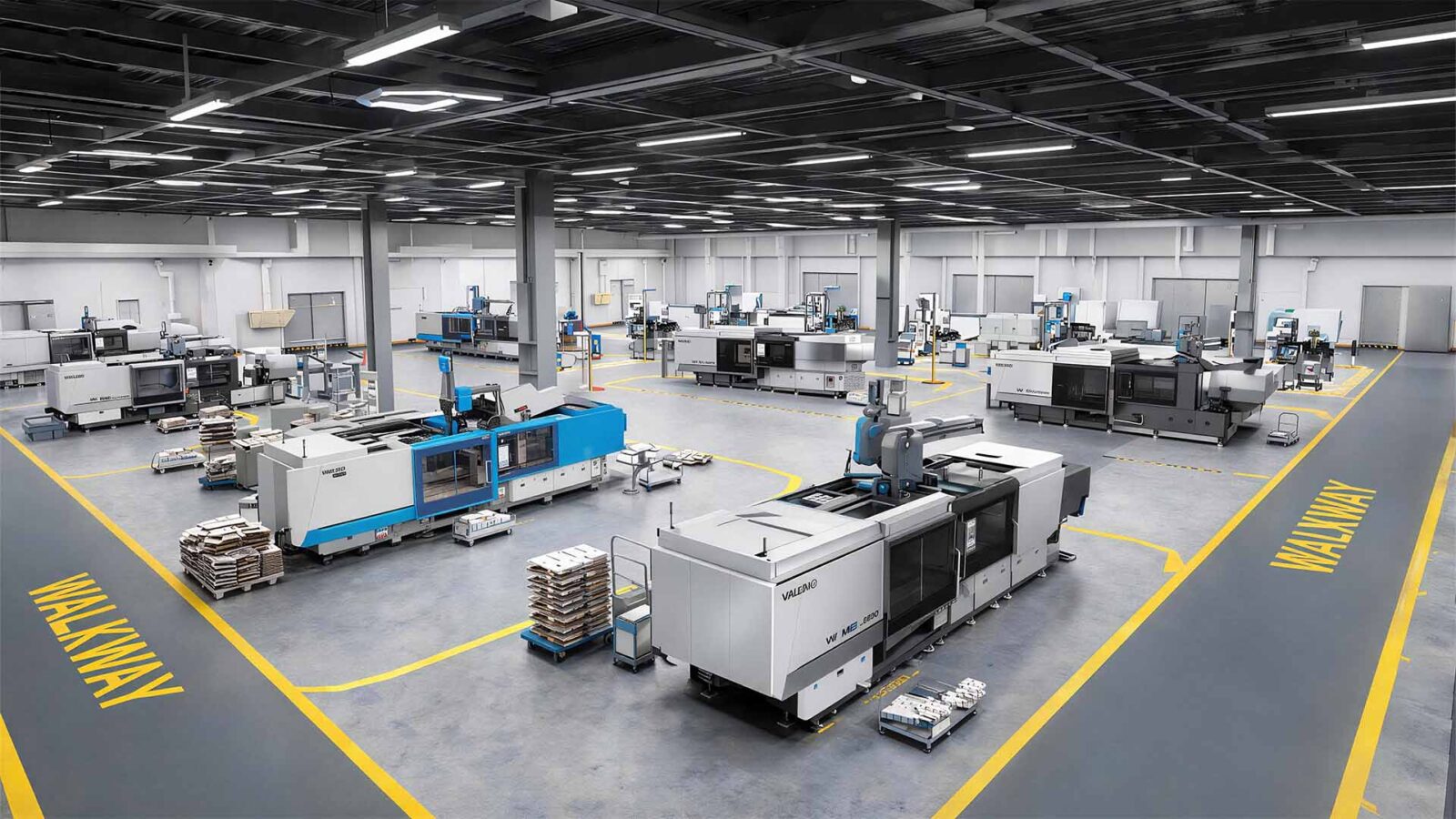
A syringe manufacturing facility is an automation chain where process steps operate in absolute synchronization. The primary and auxiliary equipment in the system include:
Primary Machinery and Automation Group
- All-Electric Plastic Injection Machines: Fully electric injection machines compliant with medical hygiene standards, featuring low energy consumption, oil-free operation, and compatibility with Clean Room environments. To reduce scrap rates and prevent color contamination, separate machines are dedicated to each part type (barrel, plunger, stopper).
- High-Cavity Precision Mold Sets: Hot-runner molds specifically engineered for barrels, plungers, stoppers, and top/bottom caps. Cold-runner and semi-hot-runner mold options are available
- Printing Machines: Units that apply volume graduation (scale/marking) lines onto the syringe barrel with sub-millimeter precision. A separate printing machine is required for each cavity.
- Automatic Assembly Machines: Automation systems that assemble barrels, plungers, stoppers, and needle components at high speeds without human intervention.
- Packaging (Blister) Machines: Thermoforming/blister packaging machines that place syringes into individual sterile packages and seal them.
- Needle Production and Assembly Line: Needle cannula alignment, siliconization, and needle hub joining units.
Common Auxiliary Equipment
- Ethylene Oxide (E.O. GAS) Sterilization Unit: Final microorganism eradication process for packaged products.
- Air-Cooled Chiller and Compressor Group: For uninterrupted operation of mold cooling and pneumatic systems.
- Part Removal Robots & L/Straight-Type Feeding Belts: Post-injection product handling automation.
- Automatic Raw Material Drying and Feeding Systems.
- Recycling Granulators/Crushers.
3. Capacity Planning and Mold Cavities
In an efficiently operated plant, capacity calculations are projected based on a 22-hour daily operation and 24 working days per month. Typical standard production capacities and mold cavity configurations are as follows:
| Syringe Type / Volume |
Monthly Production Capacity |
Mold Cavities |
| 1 cc Insulin Syringe |
3,500,000 Units (and multiples) |
Barrel: 32Cavity |
| 1 cc Three-Piece |
5,000,000 Units (and multiples) |
Barrel: 48Cavity |
| 2 cc Three-Piece |
5,000,000 Units (and multiples) |
Barrel: 48Cavity |
| 3 cc Three-Piece |
5,000,000 Units (and multiples) |
Barrel: 48Cavity |
| 5 cc Three-Piece |
5,000,000 Units (and multiples) |
Barrel: 48Cavity |
| 10 cc Three-Piece |
2,500,000 Units (and multiples) |
Barrel: 24Cavity |
Note: For larger volume syringes such as 20 cc, 50 cc, 60 cc, and 100 cc, mold cavities and machine tonnages are resized according to component dimensions.
4. Turnkey Plant Setup Steps
Realizing a syringe manufacturing facility involves more than just procuring machinery. To manufacture in compliance with international medical device standards (ISO 13485, GMP, CE), the following procedural track is followed:
[ Feasibility & ROI Analysis ] ➔ [ 3D Facility & Clean Room Design ] ➔ [ Machine & Mold Production ]
│
[ Periodic Maintenance & QC ] ◄ [ Validation & Training Support ] ◄ [ Assembly & Trial Production ]
- Feasibility and Unit Cost Analysis: Return on investment (ROI) period, raw material, energy, and labor costs per product are calculated.
- 3D Facility and Clean Room Design: HVAC and air filtration (HEPA) regulations complying with ISO standards are implemented for areas where parts are molded, assembled, and packaged.
- Machine and Mold Integration: Full-electric injection lines are synchronized with automation robots.
- Assembly, Training, and Validation: Following technical installation, process validations (IQ/OQ/PQ) are executed, and laboratory and production personnel are trained.
- Sterilization and Packaging Verification: Parameter verifications are performed within Ethylene Oxide (E.O.) sterilizer units to ready products for shipment.
Disposable syringe manufacturing stands as a strategic industrial investment that achieves high profitability and sustainable quality when correct mold cavity selection, all-electric injection machine precision, and automation-driven line design are brought together. For more information, contact ELVER Machinery.