

Although plastic injection molding is one of the most widely used methods in industrial production, it is also one of the most energy-intensive processes. With rising electricity costs and the growing importance of sustainability-focused “green manufacturing,” energy efficiency has become a critical competitive advantage for injection molding operations.
Here are 5 effective ways to reduce energy consumption and your carbon footprint without compromising process quality or production speed:
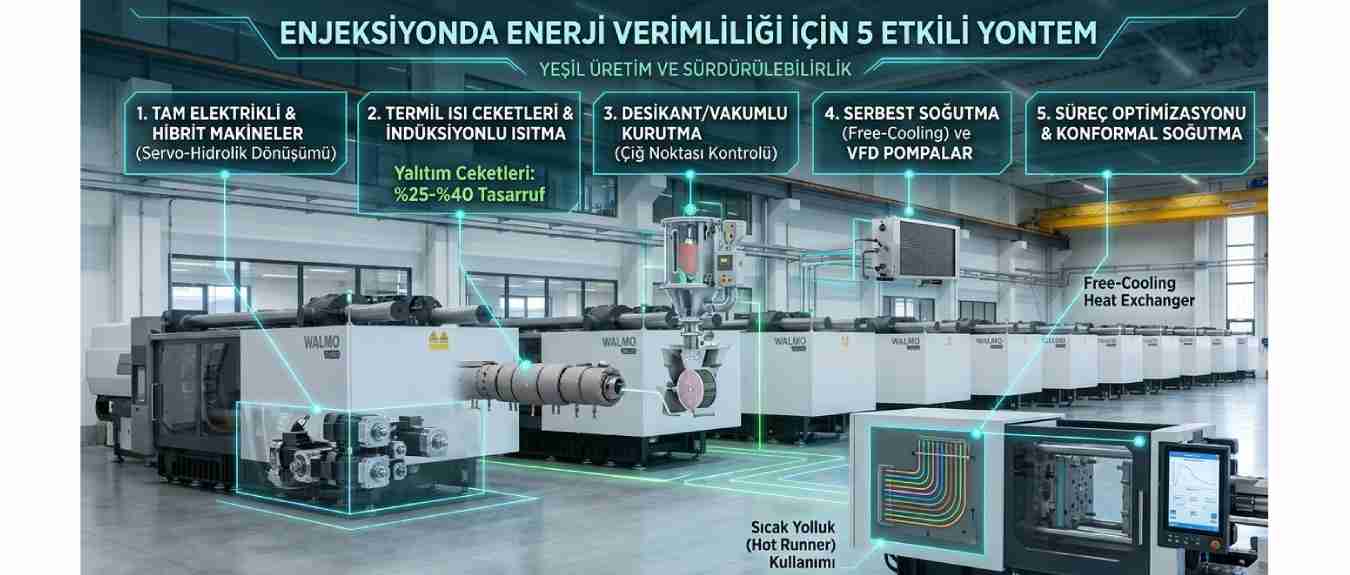
1. Replace Hydraulic Systems with Fully Electric or Hybrid Machines
Traditional hydraulic injection molding machines consume a significant amount of wasted energy due to the continuous operation of the hydraulic pump.
- Servomotor & Servo-Hydraulic Conversion: Using servomotor-driven variable-displacement pumps instead of fixed-displacement pumps in existing hydraulic lines reduces energy loss during idle (cooling) periods to near zero and yields savings of 30% to 50%.
- Fully Electric Machines: Fully electric machines, in which movements are directly controlled by servo motors, consume energy only during movement. In addition to high precision and short cycle times, they eliminate the hydraulic cooling load, offering energy savings of up to 50–70%.
2. Using Barrel Insulation and Advanced Heating Technologies
The barrel (heating element) area, where the plastic raw material is melted, is one of the machine’s largest consumers of thermal energy. Insufficiently insulated barrels dissipate a significant portion of the heat into the environment, leading to both energy waste and an increased load on the factory’s HVAC system.
- Insulation Jackets (Thermal Insulation Jackets): Special insulation jackets installed over the heating elements prevent heat from escaping the barrel. This low-cost application provides direct savings of 25% to 40% on barrel heating energy.
- Induction Heating: Switching from traditional resistors to induction-based heating systems allows heat to be generated directly within the metal vessel, thereby shortening heating times and increasing efficiency.
3. Optimizing Raw Material Drying and Preparation Processes
The raw material drying process accounts for approximately 15%–20% of total electricity consumption in plastic injection molding facilities. Errors made during the dehumidification of engineering plastics (PET, PA, PC, etc.) result in significant energy losses.
- Drying Technology: Switching from standard hot-air dryers to desiccant (moisture-removing) or vacuum drying systems with dew point control reduces energy requirements by up to 50%.
- Smart Drying Control: Smart controllers that automatically adjust the dryer tank’s capacity based on the machine’s real-time raw material consumption rate prevent over-drying and unnecessary heating of the raw material.
4. Improving Efficiency in Cooling and Chiller Systems
The cooling phase accounts for an average of 60–70% of the injection molding cycle time. Chillers and cooling towers used for mold and machine cooling consume significant amounts of energy.
- Free Cooling: Especially during winter and transitional seasons, when outdoor temperatures are low, free-cooling systems should be used to shut down chiller compressors and utilize the coolness of the outside air.
- Variable-Flow Pumps and Proper Temperature: The use of inverters (VFDs) in mold conditioners and cooling pumps adjusts water flow according to demand, preventing unnecessary pumping power consumption. Avoiding setting the mold temperature lower than necessary also reduces the load on the chillers.
5. Optimizing Process Parameters and Cycle Times
Software and process optimization efforts are among the top methods for achieving rapid energy savings without requiring any investment costs.
- Adjusting Injection and Holding Pressures: The lowest possible holding pressure and duration that do not compromise part quality should be determined. Unnecessarily high pressures place excessive strain on hydraulic and electrical systems.
- Mold Design and Runner Systems: The use of hot runner systems eliminates the energy required to remelt cold runners. Additionally, the use of conformal cooling channels (cooling channels parallel to the part’s shape) in molds significantly reduces cooling time and, consequently, the total cycle time, thereby lowering energy consumption per part.
Conclusion
Energy savings in plastic injection molding require a holistic approach—from modernizing the machine fleet to barrel insulation, and from process optimization to improving the efficiency of auxiliary equipment. While insulation and parameter adjustments—which can be initiated with minor tweaks—provide a quick return on investment, long-term investments in electric machines will ensure the company’s sustainability and competitive edge in unit part costs.