

Industrial and Commercial Plastic Buckets: Manufacturing Technologies, Geometric Designs, and Sectoral Application Guide
Plastic buckets are open-top, carrying-handle packaging solutions—typically designed in a conical-cylindrical form—engineered for the safe storage and transportation of liquids, powders, food products, and various industrial chemicals. Due to advantages such as lightweight construction, high chemical resistance, leak-proof lid technologies, and stacking efficiency, they are an indispensable component of modern supply chains. Their production primarily relies on high-durability thermoplastic polymers such as Polypropylene (PP)—including homopolymer (PP-H) and copolymer (PP-C)—and High-Density Polyethylene (HDPE).
Plastic Bucket Manufacturing Process: Injection Molding
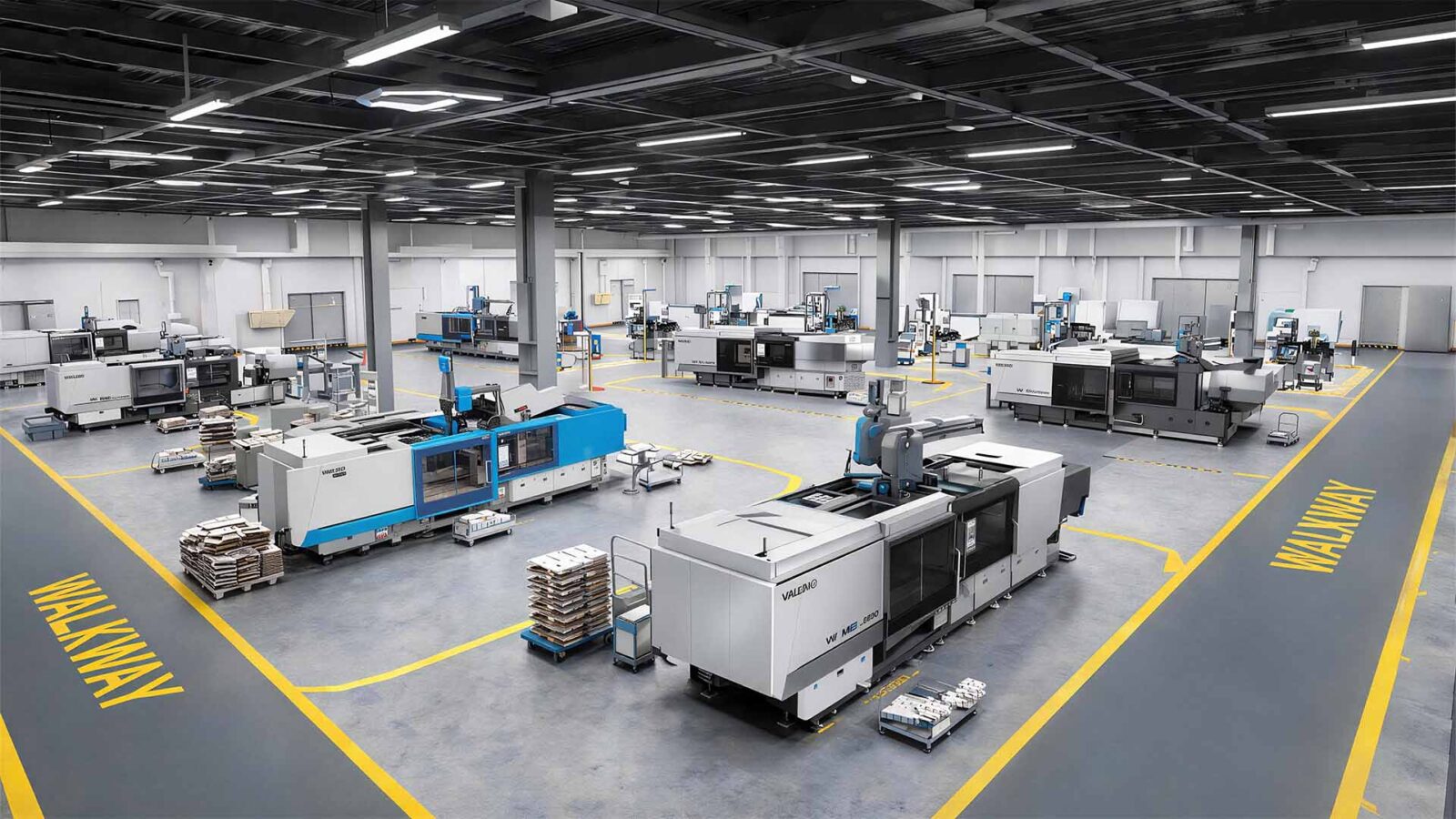
The mass production of industrial plastic buckets is carried out using Injection Molding technology, which offers high precision and repeatability. The production line consists of six fundamental stages:
1. Raw Material Preparation and Dosing: Granular (pellet) PP or HDPE raw materials are fed into the hopper of the injection molding machine. Because these polyolefin-group resins are non-hygroscopic (do not absorb moisture), pre-drying is generally unnecessary before production; however, hopper dryers can be activated for specialized applications. To achieve the desired color, volumetric or gravimetric dosing units positioned directly beneath the hopper feed masterbatch (color pigment) into the system at precise ratios.
2. Plasticizing (Melting): Through the friction generated by the rotating screw and external barrel heaters, the raw material is melted into a homogeneous, viscous fluid. Process temperatures typically range between 220°C and 280°C, though depending on the bucket’s wall thickness and the resin’s Melt Flow Index (MFI), temperatures can be elevated up to 320°C.
3. Mold Injection and Process Parameters: Molten polymer is injected under high pressure into a mold cavity crafted from specialized alloy steel. Selecting the right machine specifications is critical for high-speed, high-quality bucket production:
-
- L/D Ratio: The length-to-diameter ratio (L/D) of the injection barrel should ideally be 24 to ensure homogeneous melting.
- Barrel Capacity: To prevent material degradation during fast cycle times and maintain thermal stability, the barrel’s shot capacity must be between a minimum of 3 and a maximum of 5 times the weight of the molded product.
4. Cooling: The molten plastic filling the mold undergoes heat transfer via mold cooling channels and solidifies into the bucket shape. Particularly in thin-wall packaging production using molds made of specialized high-thermal-conductivity alloys, rapid heat transfer occurs simultaneously with filling, often eliminating the need for a separate cooling hold time.
5. Ejection and Post-Processing: The solidified bucket is released from the mold using mechanical ejector pins, compressed air valves, or stripper plates. Subsequently, automated assembly stations attach a plastic or galvanized metal handle—depending on load capacity—and match the bucket with its lid.
6. Quality Control and Packaging: Buckets coming off the production line undergo leak-proof, drop (impact), stacking load, and weight tolerance testing. Approved products are nested inside one another in compliance with hygiene standards, palletized, and prepared for shipment.
Bucket Types by Geometric Design
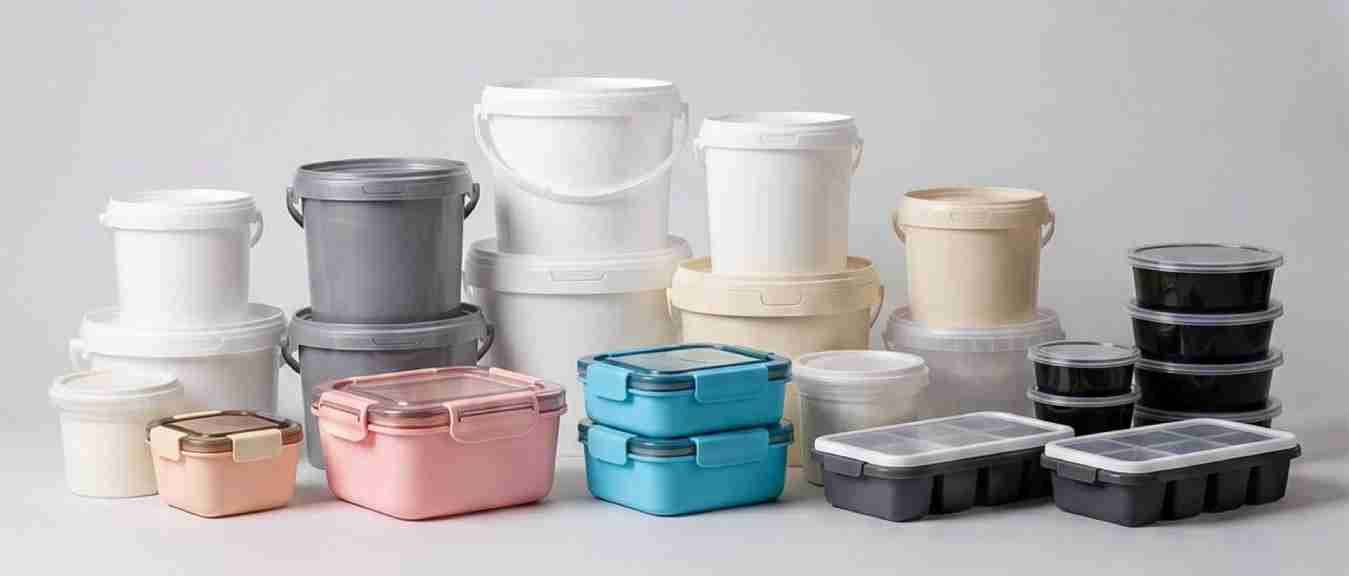
Industrial and commercial plastic buckets are manufactured in 4 primary geometric forms based on storage efficiency, shelf placement, production cost, and end-user ergonomics.
- Round (Cylindrical / Conical) Buckets: The most widely used form in the industry, offering the lowest mold and production costs. Because they lack sharp corners, internal pressure and external impacts are distributed evenly across the body wall, delivering superior leak-proof performance for liquids and heavy contents. They also allow paint rollers and industrial mixers to rotate freely inside. Their only drawback is a roughly 15–20% loss of space on pallets and shelves due to circular gaps between buckets.
- Square Buckets: Angled designs engineered to optimize warehousing and logistics costs. They align side-by-side without gaps on pallets and in truck/container loads, maximizing transport efficiency. Flat side walls enhance label visibility on retail shelves. Because corner points are more vulnerable to stacking pressure and impacts, square buckets are typically molded with slightly thicker walls than round models.
- Rectangular Buckets: Combine the space-saving benefits of square buckets with wider capacity and ergonomic shelf placement. When positioned with the long side facing inward, they maximize space utilization in narrow shelving systems and cold storage units. Their wide mouth facilitates easy scooping or spatula use—especially for ice cream, cheese, and bakery ingredients—while broad front and back panels provide a superior showcase for In-Mold Labeling (IML).
- Oval Buckets: Hybrid designs that merge the pressure resistance of round buckets with the shelf and handling advantages of angled containers. The wide elliptical opening allows wide paint rollers to be dipped directly into the bucket in the construction sector. Because they can be carried closer to the body, they balance the center of gravity when full and offer an ergonomic grip.
Body Structure Note: All four primary geometric forms are designed with a slight taper toward the base so they can nest inside one another when empty (conical nesting), drastically reducing storage and shipping costs. Straight-walled cylindrical models with equal base and mouth diameters are produced only for specialized automated filling lines.
Comparison Table of Bucket Shapes
| Feature |
Round Bucket |
Square Bucket |
Rectangular Bucket |
Oval Bucket |
| Pallet / Warehouse Efficiency |
Moderate (Circular gaps remain) |
Very High |
Very High |
Good |
| Leak-Proofing & Pressure Resistance |
Very High |
Good |
Good |
High |
| Production Cost |
Most Economical |
Moderate |
Moderate – High |
Moderate – High |
| Shelf & Brand Visibility |
Low (Curved surface) |
High |
Very High |
Good |
| Primary Applications |
Paint, chemicals, yogurt, pickles, paste |
Dry food, pet food, detergent, honey |
Ice cream, cheese, sauces, delicatessen |
Interior paints, specialty food products |
Sectoral Applications and Packaging Selection Criteria
Industries select specific resin and geometry combinations based on the physical phase of the product (liquid, viscous paste, solid/granule), cold-chain requirements, and regulatory compliance (Food-Grade Certification, UN Certification for Dangerous Goods).
1. Food, Dairy, and Beverage Industry
Certified food-grade buckets equipped with tamper-evident security locks are preferred to preserve freshness and ensure hygienic distribution.
- Dairy and Ice Cream (0.1 L – 10 L): Rectangular buckets (molded from high-cold-impact PP-C) are the industry standard for ice cream, white cheese, and cream cheese due to space savings in deep freezers/deli displays and ease of scooping. For strained yogurt, clotted cream, butter, and brined cheeses, round buckets are favored for traditional presentation and superior leak-proofing.
- Breakfast, Delicatessen, and Prepared Foods (0.3 L – 20 L): For olives, pickles, tomato paste, mayonnaise, and sauces, round buckets in 1–5 L sizes serve household consumption, while 10–20 L sizes cater to restaurants and catering . For honey, tahini, halva, jam, and chocolate spreads, square and rectangular buckets (made from PP-H suitable for hot-filling and glossy IML finishes) enhance retail shelf appeal.
- Frozen and Dry Foods: Frozen fruit purees, nuts, spices, bakery mixes, and pastry ingredients are safely stored in moisture-barrier buckets.
2. Construction, Paint, and Building Chemicals Industry
High stacking strength, job-site impact resistance (PP-C), and structural rigidity compatible with mechanical mixers are the decisive factors.
- Paints and Coatings (1 L – 25 L): Round buckets (especially 3.5 L, 7.5 L, 10 L, 15 L, and 20 L) are the standard for water-based and silicone interior/exterior paints and primers. 5 L – 18 L oval buckets or 5 L – 20 L rectangular buckets fitted with grid attachments are also used to allow direct dipping of wide paint rollers.
- Construction Chemicals and Mortar Additives: Tile adhesives, grouts, waterproofing materials, epoxy resins, decorative plasters, and concrete admixtures are packaged in heavy-duty buckets fitted with metal handles.
3. Chemical, Petrochemical, and Cleaning Industry
High-chemical-resistance HDPE and internationally compliant UN-Certified buckets are deployed for the safe storage of corrosive, flammable, or hazardous materials.
- Industrial Cleaning Products (0.5 L – 30 L): Round buckets are used for liquid detergents, surface cleaners, soft soap, and disinfectants, whereas square buckets are preferred for powder/tablet detergents and pool chemicals to maximize pallet efficiency.
- Automotive, Lubricants, and Industrial Chemicals: Greases (typically in 16 kg / 18 L or 20 L standards), antifreeze, acids, alkalis, adhesives, and textile chemicals are shipped in gasketed, leak-proof round buckets.
4. Agriculture, Horticulture, and Animal Husbandry
Packaging resistant to UV radiation, outdoor weather conditions, and moisture preserves the shelf life of agricultural inputs.
- Plant Nutrition and Protection (10 L – 30 L): High-density polyethylene (HDPE) buckets are used for liquid and solid fertilizers, agrochemicals, seeds, and plant growth regulators.
- Livestock and Pet Products (5 L – 25 L): Square buckets offer major advantages for cat/dog food, birdseed, and powdered feed supplements; because they fit snugly into household and warehouse corners, end users frequently reuse them as odor- and moisture-tight storage bins. Wide round buckets are standard for livestock mineral lick blocks and vitamin supplements.
5. Healthcare, Cosmetics, Pharmaceuticals, and Other Sectors
- Healthcare and Medical Waste Management: Single-use, one-way locking, leak-proof medical waste buckets in standardized color codes (yellow/red) are used in hospitals and clinics for the safe disposal of infectious waste and sharps. Pharmaceutical raw materials are transported in high-hygiene buckets with tamper-evident seals.
- Cosmetics and Personal Care: Hair gels, waxing products, massage creams, clay masks, and bulk shampoos/conditioners for hair salons and spas are packaged in aesthetically designed buckets.
- Seafood and Waste Management: Leak-proof food-grade buckets handle cold-chain transport of fresh or frozen fish, shrimp, mussels, and caviar, while high-capacity durable buckets serve domestic and industrial waste sorting operations.
Summary Table of Sectoral Bucket Selection
| Sector |
Preferred Shape & Volume |
Recommended Resin |
Suitable Lid & Sealing System |
Featured Products & Primary Selection Rationale |
| Construction, Paint & Building Chemicals |
Round: 1 L – 25 L
Oval: 5 L – 18 L
Rectangular: 5 L – 20 L |
PP-H (High stacking strength)
PP-C (Job-site impact resistance) |
Tamper-Evident & Snap-On Lid (Metal handle for heavy loads) |
Paint, primer, epoxy, grout. Ease of roller/brush dipping, mixer compatibility, and high stacking resistance. |
| Dairy & Ice Cream |
Rectangular: 0.2 L – 10 L
Round: 100 ml – 10 L |
PP-C (Cold-chain & deep-freezer resistance) |
Tamper-Evident & Snap-Fit Lid (Leak-proof or foil-sealed) |
Ice cream, white/cream cheese, strained yogurt, butter. Space savings in refrigerated displays and scoop/spoon ergonomics. |
| Breakfast, Deli & Prepared Foods |
Round: 1 L – 20 L
Square & Rectangular: 0.3 L – 15 L |
PP-H (Hot-filling & glossy IML surface compatibility) |
Tamper-Evident & Gasketed Lid (Liquid/brine leak-proofing) |
Olives, pickles, tomato paste, sauces, honey, tahini, halva, jam. Hot-fill compatibility, retail shelf visibility, and big volumes. |
| Chemicals, Cleaning & Lubricants |
Round: 0.5 L – 30 L
Square: 0.5 L – 20 L |
HDPE (Heavy chemicals)
PP-C (Standard cleaning agents) |
Gasketed UN-Certified Lid / Screw-Cap Spout Lid |
Grease, antifreeze, liquid/powder detergent, pool chemicals. High chemical resistance, complete leak-proofing, and maximum pallet loading. |
| Agriculture, Fertilizer & Pet Care |
Square: 5 L – 25 L
Round: 10 L – 30 L |
HDPE (Outdoor & chemical fertilizers)
PP-H / PP-C (Dry pet food) |
Gasketed / Moisture-Barrier Tamper-Evident Lid |
Cat/dog food, birdseed, fertilizer, agrochemicals. Moisture/odor protection for dry goods, stacking strength, and warehouse fit. |