

Injection Molding Plant General Planning: Setup and Investment Guide
The market for parts produced via plastic injection molding spans many critical sectors, including medical, automotive, consumer electronics, pharmaceuticals, telecommunications, food and beverage, construction, and packaging. These industries rely heavily on injection molding plant operators in manufacturing due to the strength, longevity, and high resistance of plastic products to pressure, heat, and impact.
Setting up a plastic injection factory from scratch and planning all operational processes is a multidimensional investment. Every step—from workshop layout and equipment selection to production line optimization—must be carefully addressed to maximize efficiency, product quality, and occupational safety.
How the Injection Molding Process Works
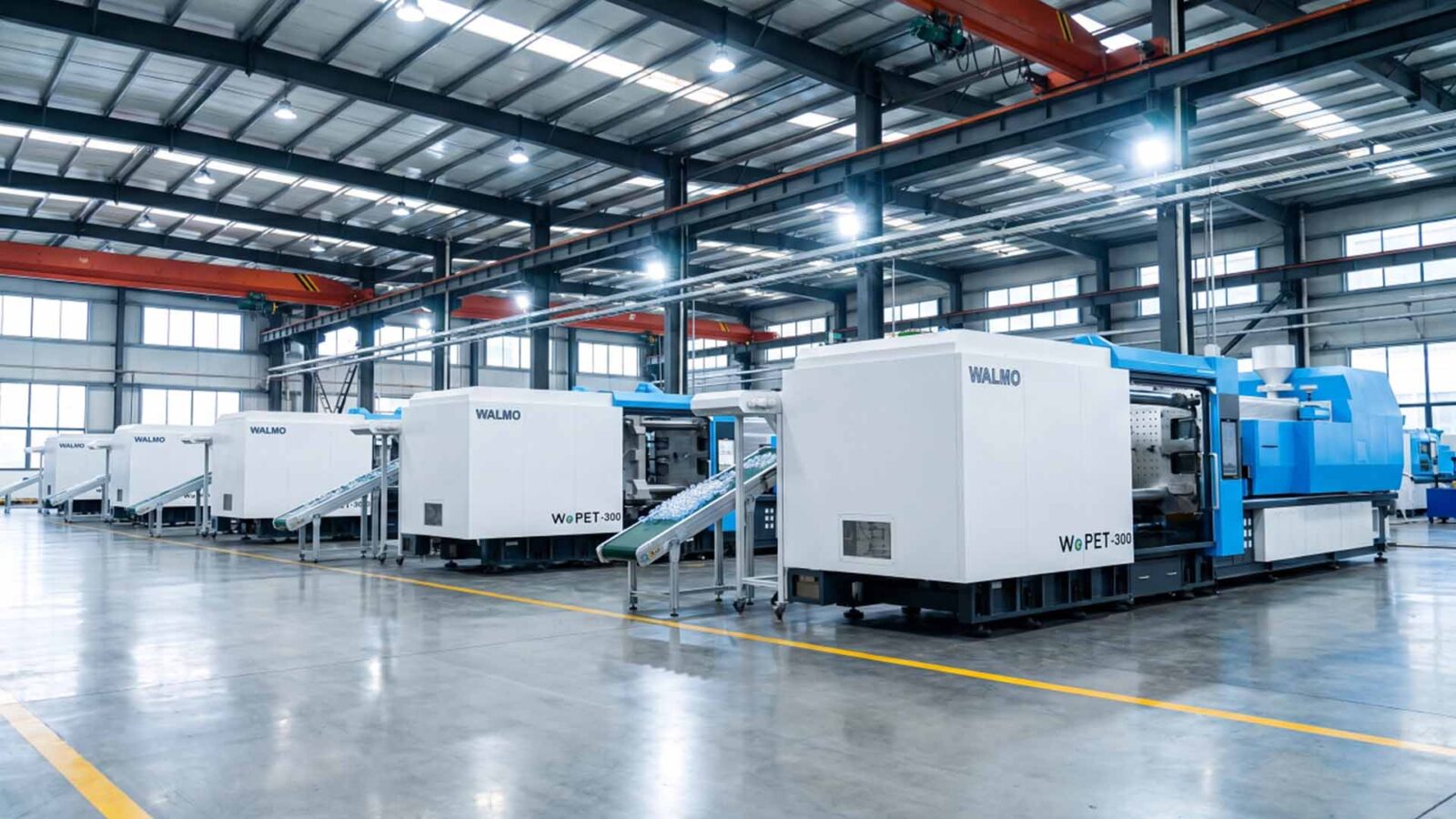
Injection molding machines form the foundation of modern plastic product manufacturing. Whether for everyday consumer goods or high-precision industrial components, these machines are the primary driver of mass production. Thanks to current technologies and optimized processes, superior-quality parts can be produced with high precision and speed.
The production cycle takes place in three basic stages:
- Melting and Injection: Thermoplastic polymer is heated until molten and injected under high pressure into the mold cavity that determines the geometry of the final product.
- Cooling and Solidification: The mold is kept at a temperature below the solidification point of the plastic so that the molten plastic cools rapidly and takes the desired shape.
- Ejection: Shortly after the plastic solidifies, the mold opens and the formed part is removed using automatic ejectors or robotic arms.
Automotive parts, electronic device housings, white goods (home appliance) components, packaging boxes, and medical device parts are the main products manufactured within a plastic mold production facility. Because each sector has its own specific quality and regulatory standards, designing the facility infrastructure in accordance with these requirements is critically important.
Injection Molding Plant Planning: Key Steps
For successful and sustainable injection molding plant planning, the following elements should be clarified before investment and during the setup phase:
- Demand and Capacity Analysis: The first step is to conduct a detailed needs analysis for the target sector and products. Which products will be manufactured and in what quantities directly determines the entire factory layout, machine park, and number of equipment units.
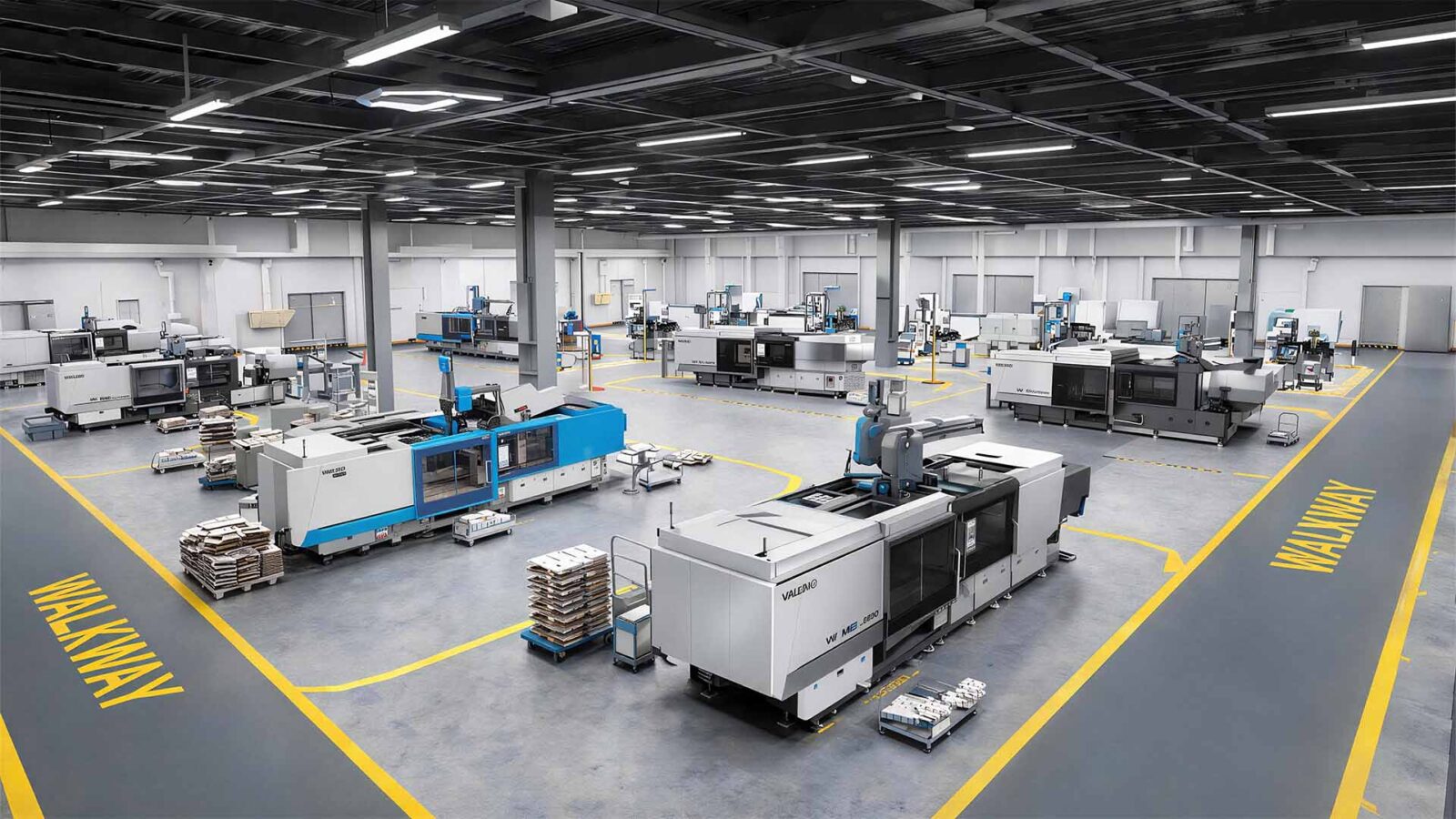
- Factory Area: A facility should be planned large enough to house the injection molding machines, allocate space for raw material and finished goods inventories, and provide a safe, spacious working area for employees.
- Site Selection: An advantageous location should be chosen in terms of logistics, energy infrastructure, and skilled labor. Ease of transportation and compliance with local industrial regulations should be evaluated.
- Operating Licenses: Necessary licenses and environmental permits must be fully obtained from the relevant local authorities so the business can operate legally.
- Skilled Workforce and Expertise: Experienced technicians and operators who master the process are essential for the smooth operation of the facility. In automated or semi-automated systems, trained staff reduce scrap rates and directly increase product quality.
- Design and Layout Planning: Facility layout should be structured in accordance with production line efficiency and occupational health and safety (OHS) standards. Getting expert support from turnkey production facility services at this stage speeds up the process.
- Machine and Equipment Selection: Based on production capacity and product variety, systems offering high energy efficiency, precision, and ease of maintenance should be preferred.
- Construction and Infrastructure Installation: Facility construction should proceed according to the approved project; crane runways, cooling water lines, and electrical infrastructure must fully comply with local laws and environmental regulations.
- Quality Management System: A structure aligned with international standards, such as the ISO 9001 quality management system, should be established to standardize production processes and ensure traceability.
- Regulatory and Sectoral Compliance: All legal and technical regulations applicable in strictly regulated sectors such as medical devices or automotive must be fully followed.
- Raw Materials: Working with reliable suppliers for plastic resins, additives, and colorants is essential for uninterrupted production and operational efficiency.
Required Machinery and Equipment for the Facility
In an efficiently operating injection molding facility, main machines and auxiliary equipment are configured as an integrated whole:
| Equipment Group | Function and Selection Criteria |
| Injection Molding Machines | Clamping tonnage and shot/injection volume are determined according to the material and size of the part to be produced; substandard machines that could risk product quality should be avoided. |
| Injection Mold | Manufactured specifically for part geometry. When choosing between cold runner and hot runner molds, production volume, part complexity, raw material cost, and target cycle time are taken into account. |
| Mold Temperature Controller | Provides homogeneity in parts, reduces surface defects, shortens cycle times, and improves overall product quality; integrated into the machine setup. |
| Robot and Automation Systems | Increases cycle stability through automatic part pick-and-place and stacking, providing significant savings in labor costs. |
| Quality Control Equipment | Safeguards production standards with dimensional measurement, strength testing, and visual defect detection equipment. |
| Auxiliary Equipment | Cooling towers, hopper dryers, chillers, granulators (crushing machines), and recycling equipment ensure uninterrupted operation. |
Advantages of an Injection Molding Investment
A properly configured plastic mold production facility offers significant competitive advantages to its investors and customers:
- High Production Efficiency: Modern machines can produce thousands of parts per hour; all-electric injection molding machines minimize energy consumption.
- Design Flexibility: Mass production of complex geometries can be carried out using different thermoplastic types and mold designs according to part requirements.
- Production Consistency: With proper process parameters, thousands of components are produced rapidly and consistently with the same dimensional accuracy.
- Cost-Effectiveness at High Volume: Once mold and machine installation is complete, unit part cost drops significantly in high-volume production.
- Sustainable Product Quality: Detailed, high-quality components are obtained consistently through a standardized setup.
- Material Durability: Parts produced from engineering plastics and quality thermoplastics show high resistance under demanding operating conditions.
Injection Molding Setup Time and Cost
The setup time and cost of an injection molding operation vary depending on the facility’s total enclosed area, preferred machine technology (hydraulic, hybrid, or all-electric), targeted production capacity, and local regulations. The investment budget covers building and infrastructure construction, machinery and equipment procurement, and ISO 9001 quality management system setup.
The installation schedule is typically completed within 6 to 12 months, depending on the scale and technical complexity of the facility. Local permitting processes, construction speed, and custom mold and machine lead times directly affect this range.
As Elver Makine, we are with you at every stage of your process of building a plastic injection manufacturing facility from scratch. With proper capacity planning, high-efficiency equipment selection, and full regulatory compliance, you can secure the long-term success of your facility.
Auxiliary Equipment requirements for a plastic injection plant.
In setting up a plastic injection facility, infrastructure and auxiliary equipment must be sized according to total machine power and tonnage class so the machine park can operate efficiently and continuously.
1. Electrical Infrastructure and Power Requirements
- Transformer and Main Distribution Panel: In addition to the total installed power of the machines (which varies depending on whether they are servo-hydraulic or all-electric), an MV/LV transformer with at least 25–30% reserve capacity should be installed for chillers, compressors, dryers, and lighting.
- Cable Channels and Busbar System: Underground cable gallery conduits aligned with the machine layout plan or busbar power distribution systems allowing flexible line changes should be preferred.
- Power Factor Correction and Harmonic Filtering: A compensation panel with active/passive harmonic filters is essential to prevent harmonic distortions that servo drives can create on the grid and to avoid reactive power penalties.
- Grounding and Uninterruptible Power Supply (UPS): Independent machine grounding below 2 Ohms and a voltage regulator/UPS should be provided for electronic control units, hot runner controllers, and robot drives against voltage fluctuations.
2. Cooling Water and Compressed Air Piping
- Separation of Cooling Circuits:
- Mold Cooling Circuit: A closed-loop air- or water-cooled chiller (typically 7–15 °C supply water temperature) should be used to prevent scaling and corrosion in mold channels.
- Machine Hydraulic Oil and Drive Cooling: A separate open- or closed-loop cooling tower (25–32 °C) line should be run for machine oil heat exchangers and inverter cooling.
- Piping and Pump Group: Corrosion-resistant PPRC or stainless steel main header lines should be installed, along with frequency-inverter circulation pumps and a buffer tank to prevent flow and pressure fluctuations.
- Water Treatment: A water softening unit, sediment/strainer filters, and automatic chemical dosing systems should be installed for chiller and cooling tower circuits.
- Compressed Air Line: A screw compressor, air dryer, and closed-loop galvanized/aluminum air line providing a constant 6–8 bar pressure are required for pneumatic core movements, mold air ejectors, robot vacuum/gripper systems, and central raw material conveying.
3. Crane and Mold Handling Infrastructure
- Overhead Bridge Crane: A double-girder or single-girder overhead bridge crane should be planned with a lifting capacity of at least 1.5 times the total weight (male + female mold) of the heaviest mold in the facility.
- Hook Height and Column Grid: To allow the mold to pass safely over the machine tie-bars, crane hook height should be calculated by adding the heaviest mold height and rigging allowance above the tallest machine body.
- Floor Load Capacity: In areas where high-tonnage machines and mold storage racks will sit, C30/C35 grade industrial concrete, double-layer welded wire mesh reinforcement, and a surface hardener should be applied.
- Mold Storage and Maintenance Area: Within the crane access zone, heavy-duty mold racks, a mold opening/closing maintenance table, and a mold preheating station should be positioned.
4. Auxiliary Equipment List
| Equipment Group | Core Equipment | Critical Selection Criterion |
| Raw Material Preparation and Feeding | Dehumidifier dryer, hot-air hopper dryer, vacuum raw material loader, central feeding station | Dehumidifying systems with a -40 °C dew point should be selected for engineering plastics (PA, PC, PET, ABS). |
| Dosing and Mixing | Volumetric or gravimetric masterbatch/additive dosing units, tumbler mixer | Gravimetric dosing is preferred for jobs with high color accuracy and for saving raw material on high-weight parts. |
| Mold Temperature Control | Water-type and oil-type mold temperature controllers (MTC), hot runner controllers | Pressurized water (up to 140–160 °C) or thermal oil (up to 300 °C) units are determined based on process temperature. |
| Recycling (Grinding) | Beside-the-press low-speed sprue granulators, central high-capacity granulators, dust separators | Granulators with hardened blades that keep dust generation to a minimum and suit fiber-filled materials should be selected. |
| Automation and Handling | 3- or 5-axis servo top-entry robots, sprue pickers, conveyor belts | Machines should be compatible with EUROMAP 67/73 interfaces to shorten cycle time and reduce operator dependency. |
Note: Artificial intelligence technologies were utilized during the drafting and linguistic refinement stages of this text; however, the technical details were compiled by the team at ELVER Dış Ticaret Ltd. Şti., drawing upon their own field experience.