

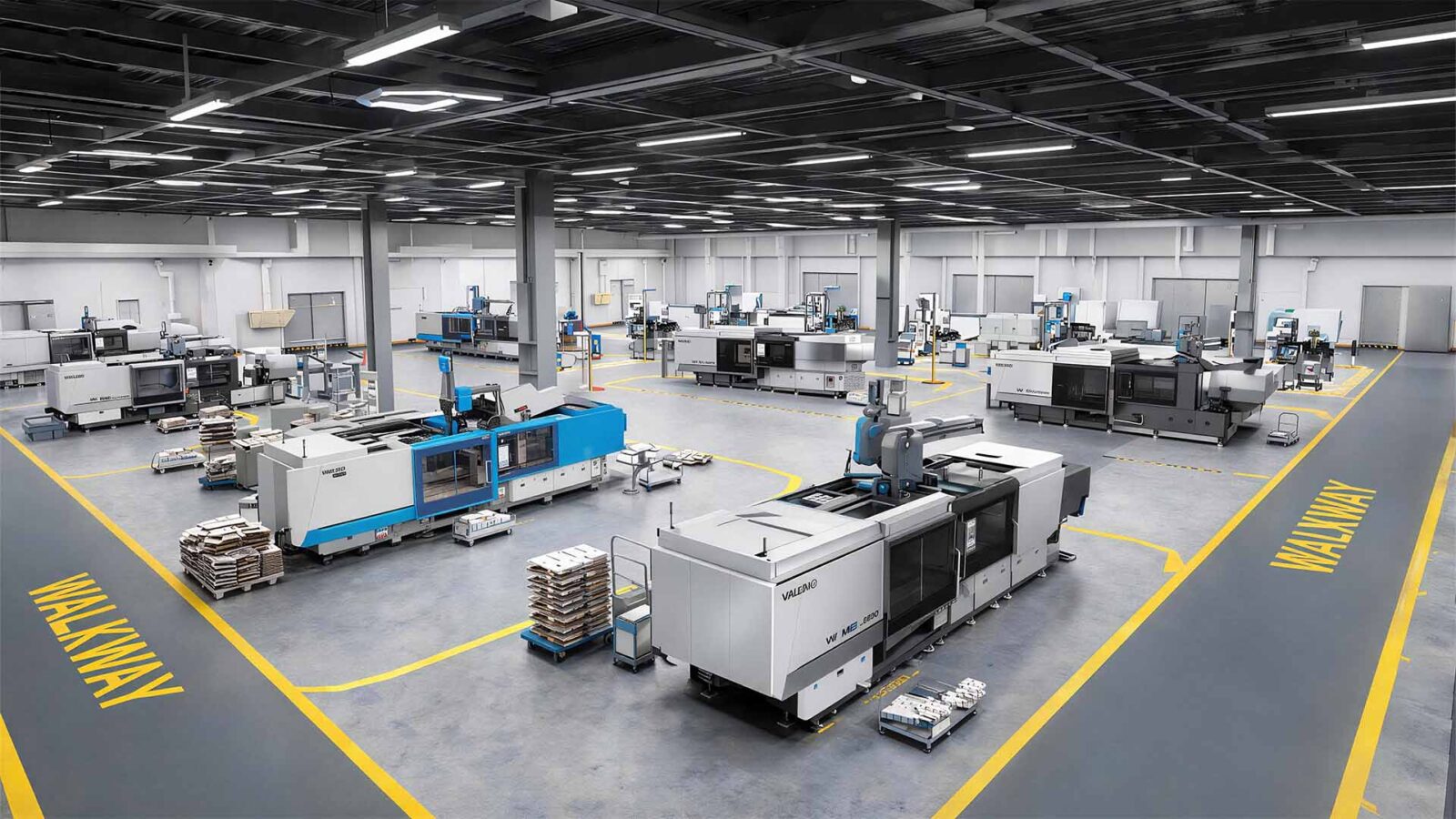
In plastic injection molding machines, particularly in all-electric and hybrid injection molding machines, the most critical mechanical component that converts rotary motion into linear motion with high efficiency and millimeter-level precision is the ball screw system.
The linear thrust force traditionally generated by hydraulic cylinders has been replaced in electric machines by high-torque servo motors and ball screw (ball spindle) mechanisms operating in conjunction with these motors.
1. What is a Ball Screw and How Does It Work?
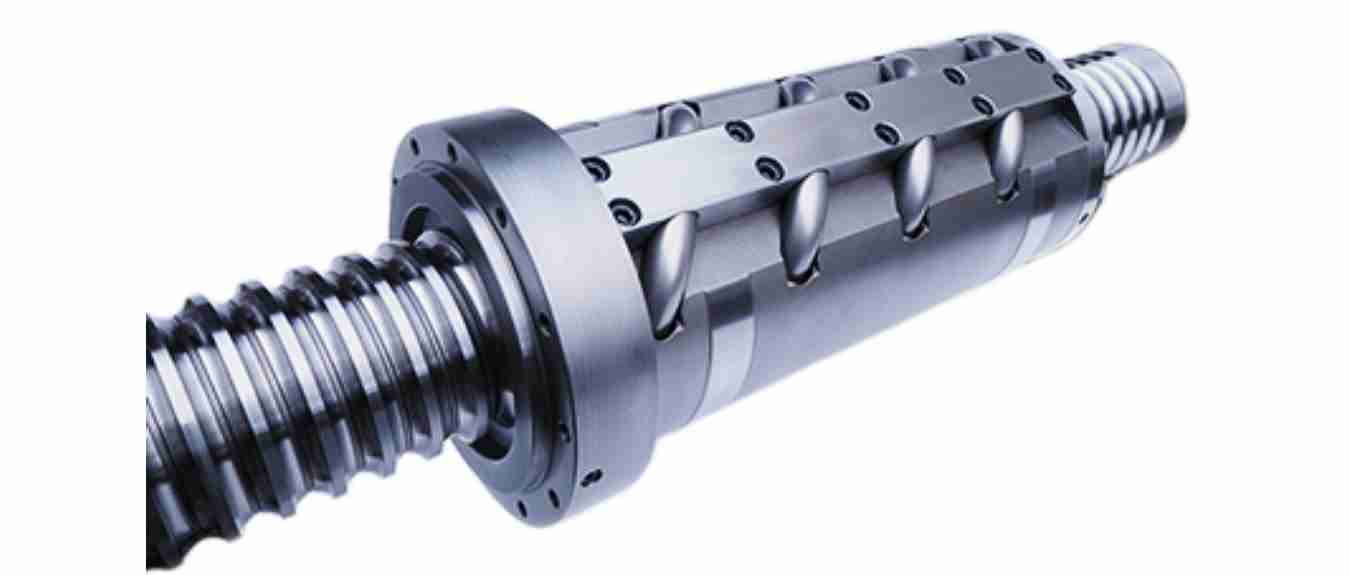
A ball screw is a mechanical transmission element consisting of a screw shaft with helical grooves, a nut surrounding this shaft, and steel balls rolling in the grooves between the two.
┌─────────────────────────┐
Rotary Motion │ Nut │ Linear Motion
(from Servo Motor)─►│ ┌───┐ o ┌───┐ o ┌───┐ │ ──► (Axial Push/Pull)
│ └───┘ o └───┘ o └───┘ │
└─────────┼───────────────┘
└─► Steel Balls (Endless Recirculation)
- Endless Ball Recirculation: As the nut rotates or moves along the shaft, the balls roll between the screw threads. Thanks to specialized return tubes inside the nut, the balls continuously recirculate back to the beginning in an endless loop. This is where the term “endless screw” originates.
- Friction Reduction: Because rolling friction is utilized instead of sliding friction, mechanical efficiency reaches exceptionally high levels of 90%–95%.
2. Role and Applications in Injection Molding Machines
In an electric injection molding machine, ball screw systems operate across the following main axes:
- Injection Axis: Pushes the screw forward during the stage where molten plastic is injected into the mold under high pressure (requires high pressure and high speed resistance).
- Mold Opening/Clamping Axis: Used for rapid mold closure and transmitting high-tonnage forces during the clamping phase.
- Ejector Axis: Precisely actuates the ejector pins to smoothly eject the finished part from the mold.
3. Ball Screw Features Specific to Injection Molding Machines
There are significant differences between ball screws used in standard CNC machine tools and those used in injection molding machines. The ones used in injection molding machines are categorized as “High-Load Ball Screws.”
- High Load Capacity: They are manufactured from specially hardened, high-alloy steels to withstand thousands of bars of pressure generated during injection, as well as high clamping tonnages.
- Ball Diameter and Groove Geometry: Larger ball diameters and specialized Gothic-Arch groove profiles are used compared to standard screws. This increases the contact points, ensuring an even load distribution.
- Shock and Acceleration Resistance: They are engineered to prevent elastic deformation under instantaneous stops, starts, and sudden directional reversals (high acceleration).
4. Advantages of Ball Screws in Injection Molding Machines
| Feature |
Description / Benefit |
| High Efficiency and Energy Savings |
Efficiency exceeds 90%. It completely eliminates the energy losses converted into heat in hydraulic systems. |
| Micron-Level Precision |
Thanks to preloaded, backlash-free nut designs, the injection position and part shot weight are repeatable down to the micron level. |
| High Speed and Response Time |
Connected directly or via belt-pulley to the servo motor, it responds to instantaneous speed changes and commands within milliseconds. |
| Clean and Hygienic Operation |
With no risk of oil leaks or burst hydraulic hoses, it is perfectly suited for cleanroom environments in medical and food packaging production. |
| Quiet Operation |
Operates at extremely low noise levels compared to the sound of hydraulic pumps. |
5. Lubrication and Maintenance Requirements
The longevity of ball screws relies on regular and proper lubrication.
- Automatic Lubrication Systems: Injection molding machines generally utilize automatic grease or liquid oil lubrication systems.
- Consequences of Wear and Poor Maintenance: Insufficient lubrication degrades the surface smoothness of the balls and screw grooves, leading to overheating, backlash formation, and ultimately a loss of product precision.
Summary
The low energy consumption, millimeter-level repeatability, and high production speeds offered by electric plastic injection molding machines rely directly on the success of ball screw technology. By converting the rotational power of the servo motor into immense linear force, these components stand as one of the most vital engineering achievements in modern plastics manufacturing.